★★★★★
“I did not even realise how much was shifting until friends started saying: you seem different. Calmer. Lighter. And I was sleeping through the night again.”
Jeff · football coach
Sleep and recovery
You are not doing bedtime wrong. 15 to 20 minutes of guided audio at bedtime, and nothing to practise.
Start your 7 night free trialOne session free for seven nights · No credit card
In short


★★★★★“Rob’s hypnotherapy actually worked! I now fall asleep faster, stay asleep longer, and wake up refreshed.”
Geraldine B. · MindShift Mentors client
Sound familiar
Insomnia is not a willpower problem. It is a stress response your nervous system learned, and learned responses can be unlearned.
Left alone, broken sleep does not fix itself. It quietly drains your mood, your health and your patience with the people who matter most. Most people have already spent years, and a small fortune on aids and gadgets, trying to force their way back to sleep.
Want the why first? Here is what is actually happening when you wake at 3am, and which sleep problem you have actually got.
Why nothing has held
None of it is useless. It is just all aimed at the wrong layer.
They fill the silence, which helps some people drop off. A mind that will not stop is still a mind that will not stop.
They can put the body down. They do not touch whatever it is that wakes you again at three.
Cool room, no screens, same bedtime. All worth doing, and none of it settles a nervous system that is still running hot.
It gets you under faster and then fragments the back half of the night. For a lot of people the three in the morning wake up starts here.
More hours lying awake is not more sleep. It usually just gives the worrying more room to work in.
The one thing that reliably makes it worse. Sleep is the only thing you cannot get by pushing at it.
You cannot force sleep, and trying harder is part of what keeps you awake. The pattern keeping you wired lives below conscious thought, which is exactly where these sessions work.
Ten minutes, yours
Not a clip and not a preview. The whole session, and no sign up. Then decide whether the rest is worth it.
Calm Reset 10 min · Rob Edmonds
0:0010:00
Best in bed with the light already off. Drifting off before the end is rather the point. While listening, you remain aware and in control, able to hear what is being said and respond if you choose. Do not listen while driving or operating machinery.
Whatever you noticed just then was your own doing. The session is only the way in.
That is the whole thing. No homework, no willpower, nothing to practise.
Start your 7 night free trialOne session free for seven nights · no credit card · cancel anytime
What you actually get
Your membership also includes access to the complete MindShift library.





The offer
One session free for 7 nights, no credit card. Subscribe and the whole library opens.
Monthly
Works out at $359.40 a year
Annual
The same as $24.92 a month. You keep $60.40.
That is about 82 cents a night, and you can start tonight.
Being straight about it
Here is who it tends to work for, and who should look elsewhere first.
This does not diagnose, treat, cure or prevent any condition, and it does not replace your doctor. Get persistent sleep trouble looked at, particularly if you snore heavily, wake gasping, or stop breathing in your sleep. Sleep apnoea and restless legs need a diagnosis, not an audio session. And if things are bad right now, do not start with an app. In Australia, Lifeline is on 13 11 14 and the Suicide Call Back Service is on 1300 659 467, both free and both open all night. This work is designed for the long grind, not for an emergency.
If you are in immediate danger or at risk of harming yourself, contact emergency services immediately.
Australia: Lifeline 13 11 14 | Emergency 000
USA: 988 Suicide & Crisis Lifeline | Emergency 911
UK: Samaritans 116 123 | Emergency 999
Real people, real results
“I did not even realise how much was shifting until friends started saying: you seem different. Calmer. Lighter. And I was sleeping through the night again.”
Jeff · football coach“I am finally sleeping through the night, deep, restful sleep I have not felt in years. I feel calmer, more grounded, and finally free to breathe again.”
Crystal · clientReal people, real stories
★★★★★
“As a nurse and mom, I needed better sleep. Mindshift Mentors’ recordings help me relax and sleep deeply.”
Adriana Rivera (Addy)
★★★★★
“After years of struggling, I’m now getting full nights of sleep. Only 10 days into the audio. Thank you!”
Kristyna Hayward
★★★★★
“I love the Mindshift Mentor recordings. I have long suffered a busy mind especially at night when the worry demons invade. If I can quiet my mind I quickly fall back asleep. I have tried so many things, psychologists, warm milk before bed, sliced turkey haha, yoga, warm shower/bath, journaling - you name it. However what has really helped is listening to these soothing guided meditations - I don’t know if I have actually made it to the end of one! I simply play them on my ipad before the mind starts and I’m out of it. Such a great find and the small investment has a big payday when i jump out of bed and aren’t tired during the day!”
Jim McIntyre
★★★★★
“I had developed a really bad habit of clenching and grinding my teeth at night, especially during stressful periods. It was affecting my sleep and starting to impact my mood and energy levels. My brother Callan told me about Mindshift Mentors, so I decided to try their audio sessions. I didn’t know what to expect, but Rob’s voice is so calm and grounding, and the sessions just clicked with me. After a few nights of listening, I noticed a huge difference. I was waking up with a relaxed jaw and sleeping more deeply. If you’re struggling with nighttime jaw tension, I can’t recommend Mindshift Mentors highly enough. It’s made such a difference in my life.”
Ashleigh Muir
★★★★★
“I had been grinding my teeth in my sleep for years, and nothing seemed to help, not even the expensive mouthguards. I was constantly waking up with jaw pain and headaches. A friend recommended Mindshift Mentors, and I started listening to their audio sessions. I wasn’t sure what to expect, but from the very first audio, something shifted. The way Rob explains things just made sense, and the sessions helped me let go of the tension I didn’t even realise I was holding. Honestly, I’m blown away. This approach is unlike anything I’ve tried.”
Callan Muir
★★★★★
“Rob’s hypnotherapy actually worked! I now fall asleep faster, stay asleep longer, and wake up refreshed.”
Geraldine B.
Individual experiences vary. Testimonials describe individual experiences and do not guarantee that another person will achieve the same result.
What it actually is
Cognitive Pattern Reprogramming is designed to help people recognise and interrupt unhelpful patterns in the way they think, respond and behave.
Rob Edmonds explains the method, about six minutes
No going back over the day and no talking it through. The session helps with the response that keeps you switched on when you want to be switching off.
You are not asked to revisit whatever it is that is keeping you up. There is nothing to recount and nothing to talk through.
Strategic Psychotherapy and behavioural science combined. The whole of it happens while you are lying down and listening, so there are no exercises to keep up and nothing to remember during the day.
The sessions are designed to be repeated, and there is no fixed timeframe. What people notice, and when, varies a lot, and we make no promise about either. If you want the method in full, here is how Cognitive Pattern Reprogramming works.
The man behind the MindShift Method
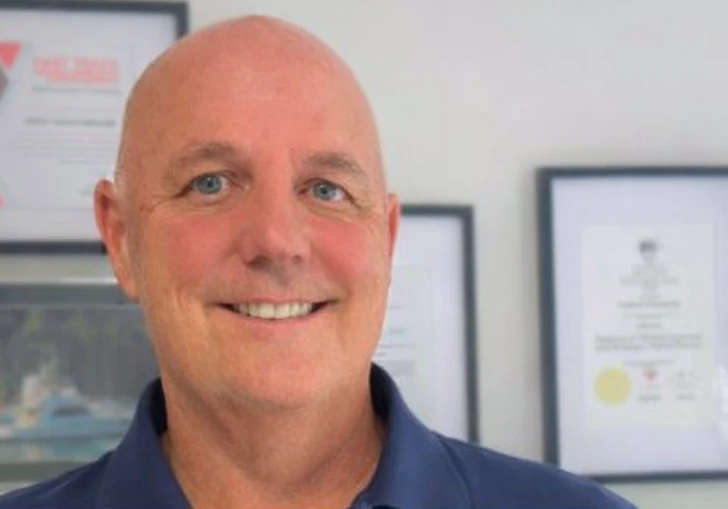
Rob Edmonds
Diploma of Clinical Hypnosis and Strategic Psychotherapy
Certified Neuro-Linguistic Programming Practitioner · ISPA member · ASCH member
Rob was nineteen and could not speak in front of a room. Not nervous, genuinely unable, and it was costing him exams. He tried something he had run out of reasons not to try, and a few sessions sorted it. It worked in a way that annoyed him slightly, because it should not have been that straightforward. That quietly shaped everything after it.
He trained at the Institute of Applied Psychology in Sydney and went on to create Cognitive Pattern Reprogramming, part of the MindShift Method. He creates every session in the library himself, and still sees clients one to one.


What is actually going on
Trouble sleeping has many possible causes, and several of them are medical. Pain, medicines, menopause, a circadian disorder, sleep apnoea and restless legs all belong on that list, and none of them are what this program is for. What follows is about one contributor only: for a lot of people the trouble is not being tired enough, it is switching off, and those are two different systems.
Most people who cannot sleep assume they are doing bedtime wrong. They are usually doing bedtime fine. The system meant to wind you down is being overruled by one built to keep you alert, and that second system does not check the clock before it runs.
Alertness hormones do not switch off when the day does.
They are two different systems, and when they disagree the stress response wins.
A few ordinary explanations stacked on top of each other, and most people are carrying more than one.
No, and they need different work.
Sleep hygiene works on the conditions around sleep. Tablets work on the body. Neither reaches the part keeping you switched on.
The Mindshift Method app can be used alongside appropriate medical, psychological or therapeutic care where required.
Naming it properly
Nine common sleep problems, explained in plain language. They are not all the same thing, and they do not all need the same kind of support. Here is how to tell the difference, including when this program may help and when a doctor should come first.
Difficulty falling asleep or staying asleep, often both, running long enough that it starts costing you the following day.
This is exactly the wired, can't-switch-off kind of night the program helps with.
More on insomnia and why it hits shift and frontline workers hardest
Breathing interruptions during sleep. Heavy snoring, waking gasping, and being exhausted after what looked like a full night are the usual signs.
See a doctor. This needs a diagnosis and a sleep study, not an audio session, and no amount of calm fixes an airway.
Insomnia when you are supposed to sleep and overwhelming fatigue when you need to be alert, caused by working against your body clock. Over time it throws off melatonin and cortisol, which makes finding balance harder again.
The program helps with the wired part. The timing part still needs your roster taken seriously.
A neurological condition causing an uncontrollable urge to move the legs, often with tingling, itching or crawling sensations. It usually worsens at night and during rest, which is exactly when you are trying to drop off. It is common in pregnancy and can intensify in the third trimester.
Worth talking to your doctor about first. The Mindshift Method sessions may be used for general relaxation and stress support alongside appropriate medical care.
A neurological disorder affecting the brain's ability to regulate sleep and wake. It shows up as excessive daytime sleepiness, sudden loss of muscle control known as cataplexy, and disrupted sleep at night.
This does not cure narcolepsy and does not claim to. It is a diagnosed medical condition. Mindshift may be used for general stress and emotional wellbeing support alongside specialist care.
As oestrogen fluctuates and declines the brain becomes more reactive and the nervous system more sensitive. Old anxieties resurface, emotional regulation gets harder, and the overthinking that was manageable before turns louder and faster. Sleep is usually the first thing to go.
The reactive, overthinking part is exactly what the pattern work is for. Hormonal symptoms are your doctor's side of it.
ADHD is linked to irregular circadian rhythms, and melatonin, the hormone that signals it is time to sleep, often arrives late. That mismatch leaves the brain in daytime mode at bedtime, so you lie there wide awake no matter how consistent the routine is.
The sessions are designed to support relaxation and difficulty mentally switching off. The timing side is worth raising with a doctor, particularly for a child.
After traumatic events, nightmares, flashbacks and hyperarousal make falling and staying asleep genuinely difficult. Waking in a sweat from a nightmare about something years old is common, and it is not a sign you are going backwards.
The sessions focus on relaxation, sleep preparation and the stress responses surrounding sleep without requiring you to relive past events. If trauma is the main event please work with someone alongside this.
Involuntary grinding or clenching of the teeth during sleep. Most people have no idea they do it until the symptoms turn up: morning headaches, a sore jaw, facial tension, tooth sensitivity. A mouthguard protects the teeth without stopping the grinding.
Stress can be one factor associated with grinding and jaw tension, so these sessions focus on the stress and habit-pattern side. Bruxism and any dental damage should also be assessed by a dentist or appropriate health professional.
If you are not sure which of these you have, that is a question for your doctor and it is worth asking. A sleep study rules the physical ones in or out, and knowing is cheaper than guessing for another year. If you have already been checked and told nothing is physically wrong, that is usually the point at which this work is worth a look. Tracking your nights can help you describe the pattern to them, and there is a rundown of sleep trackers if you want one.
If it is the wired, racing mind keeping you up, this is built for that.
Start your 7 night free trialOne session free for seven nights
More on sleep
Being tired and being able to sleep are two different things. All day, activity keeps the stress response busy. The moment you lie down and the distraction stops, that response has nothing left to do except run, and it arrives as a racing mind. It is not that you are not tired enough. It is that the system is still switched on.
Falling asleep partway through a session is fine, and with a sleep session it is more or less the point. Nobody has to concentrate for this to do its job, and there is nothing to catch up on the next night.
This pathway has a session built for the three in the morning wake ups, Back to Sleep After Waking. Waking in the night is normal, and the trouble is usually what happens next: the mind switches on and will not switch back off. The session is designed to help with that response rather than with the waking itself, so getting back down stops being a fight.
We cannot tell you, and anyone who gives you a number is guessing. The sessions are designed to be repeated, and there is no fixed timeframe. Some people notice changes quickly while others find change develops more gradually. Individual experiences vary, and it will not be better every night on the way. If nothing has shifted by the end of the trial, cancel it. There are no guarantees on timing. Consistency is what makes the difference, not effort.
It draws on hypnosis, and it is more than a sleep meditation. Clinical Hypnosis is one of the approaches used within Cognitive Pattern Reprogramming, alongside Strategic Psychotherapy and Neuro-Linguistic Programming. The hypnotic state is a highly focused state of attention in which the therapeutic work takes place. The sessions are delivered as guided audio, while listening you remain aware and in control, able to hear what is being said and respond if you choose, and they are designed to sit alongside anything else you already use.
You do not need to come off sleeping tablets to start, and please do not change any medication because of a web page. The Mindshift Method sits alongside what you are already doing, and plenty of people start while still taking something. Any decision about coming off is one for you and your doctor, on your timing, not ours.
Sharing a bed is not a problem. Use headphones, or an earbud in one ear. The sessions are quiet and spoken, so a single earbud is plenty, and it means your partner is not listening to a session meant for you. Plenty of couples end up doing it together.
Shift work is fine. What matters is one session a day before your main sleep, whenever that falls. Shift work makes the pattern harder to shift because the timing keeps moving, so keep listening regularly rather than judging it on a bad rotation.
Afternoon caffeine matters more than most people expect. Caffeine's effects last for hours, so a five o'clock coffee can genuinely be the reason you are staring at the ceiling at two in the morning. Even when you do get off, a high intake fragments the night and keeps you out of the deep, restorative part of it.
A wine before bed is the most common workaround there is, and it does work at the start. Alcohol makes you drowsy, then disrupts the sleep cycles later on and can make insomnia worse over time, which is why so many people who use it fall asleep easily and then wake at three. You do not have to give it up to start this, but it is worth knowing which part of the night it is costing you.
Whether to take melatonin is a question for a healthcare provider, not a web page. Melatonin is the hormone that signals your body it is time to sleep, and a low dose can help shift the body clock, particularly after a night shift. It is not an instant sleep aid, and it works best alongside a dark room and a consistent routine rather than instead of them.
The sessions are designed to support relaxation, sleep preparation and the mental loops that can make it difficult to switch off at night. It is more than missing sleep: it drains your energy, clouds your thinking and makes the next day harder. If you have persistent or diagnosed insomnia, the Mindshift Method should be used alongside appropriate medical or professional advice rather than as treatment for the condition itself.
The free trial gives you one full session, unlocked, for seven nights, and no credit card is needed to start. Listen to it each night and see whether anything moves. If you go on to subscribe, you can cancel anytime.
The offer
One session free for 7 nights, no credit card. Subscribe and the whole library opens.
Monthly
Works out at $359.40 a year
Annual
The same as $24.92 a month. You keep $60.40.
That is about 82 cents a night, and you can start tonight.