★★★★★
“I was so overwhelmed this morning, and after a session I already feel so much better. It is all about changing those habits and behaviours.”
Sydney · client

Focus, ADHD and mental performance
An ADHD brain is not a broken one. 15 to 20 minutes of guided audio a day, and nothing to practise.
Start your 7 night free trialOne session free for seven nights · No credit card
In short





Sound familiar
An ADHD mind is not a character flaw and it is not laziness. It is wired differently, and the patterns that build up around it can be reset.
Left alone, the noise does not quiet on its own. It quietly costs you opportunities, relationships and the belief that you are actually capable. Most people have already spent years, and plenty of money, on systems and apps that worked for a fortnight and then fell apart.
Why nothing has held
None of it is useless. It is just all aimed at the wrong layer.
They work brilliantly for about a fortnight. Then the system itself becomes one more thing you are behind on.
Genuinely useful for getting started. They do nothing about the flood that arrives when something lands wrong.
For a lot of people it lifts the focus, and that is worth having. It tends not to touch the rejection sensitivity or the shame loop underneath.
Understanding why you do it is a real relief. Understanding a pattern and changing it are two different jobs.
The strategy that has failed most reliably, for the longest, at the highest cost to how you see yourself.
Holding the performance together works right up until the door closes and there is nothing left in you for the people at home.
You were never lazy and you were never broken. The patterns run below conscious thought, which is exactly where these sessions work.

Ten minutes, yours
Not a clip and not a preview. The whole session, and no sign up. Then decide whether the rest is worth it.
Calm Reset 10 min · Rob Edmonds
0:0010:00
Headphones help, and so does somewhere you will not be interrupted. There is nothing to concentrate on, so a wandering mind is fine. Do not listen while driving or operating machinery.
Whatever you noticed just then was your own doing. The session is only the way in.
That is the whole thing. No planners, no systems to keep up with.
Start your 7 night free trialOne session free for seven nights · no credit card · cancel anytime
Real people, real results
“I was so overwhelmed this morning, and after a session I already feel so much better. It is all about changing those habits and behaviours.”
Sydney · client“The constant anxiety, the overwhelm, the pressure to control everything, it is all softened. I feel calmer, more grounded, and finally free to breathe again.”
Crystal · clientReal people, real stories
★★★★★
“As a nurse and mom, I needed better sleep. Mindshift Mentors’ recordings help me relax and sleep deeply.”
Adriana Rivera (Addy)
★★★★★
“After years of struggling, I’m now getting full nights of sleep. Only 10 days into the audio. Thank you!”
Kristyna Hayward
★★★★★
“I love the Mindshift Mentor recordings. I have long suffered a busy mind especially at night when the worry demons invade. If I can quiet my mind I quickly fall back asleep. I have tried so many things, psychologists, warm milk before bed, sliced turkey haha, yoga, warm shower/bath, journaling - you name it. However what has really helped is listening to these soothing guided meditations - I don’t know if I have actually made it to the end of one! I simply play them on my ipad before the mind starts and I’m out of it. Such a great find and the small investment has a big payday when i jump out of bed and aren’t tired during the day!”
Jim McIntyre
★★★★★
“I had developed a really bad habit of clenching and grinding my teeth at night, especially during stressful periods. It was affecting my sleep and starting to impact my mood and energy levels. My brother Callan told me about Mindshift Mentors, so I decided to try their audio sessions. I didn’t know what to expect, but Rob’s voice is so calm and grounding, and the sessions just clicked with me. After a few nights of listening, I noticed a huge difference. I was waking up with a relaxed jaw and sleeping more deeply. If you’re struggling with nighttime jaw tension, I can’t recommend Mindshift Mentors highly enough. It’s made such a difference in my life.”
Ashleigh Muir
★★★★★
“I had been grinding my teeth in my sleep for years, and nothing seemed to help, not even the expensive mouthguards. I was constantly waking up with jaw pain and headaches. A friend recommended Mindshift Mentors, and I started listening to their audio sessions. I wasn’t sure what to expect, but from the very first audio, something shifted. The way Rob explains things just made sense, and the sessions helped me let go of the tension I didn’t even realise I was holding. Honestly, I’m blown away. This approach is unlike anything I’ve tried.”
Callan Muir
★★★★★
“Rob’s hypnotherapy actually worked! I now fall asleep faster, stay asleep longer, and wake up refreshed.”
Geraldine B.
Individual experiences vary. Testimonials describe individual experiences and do not guarantee that another person will achieve the same result.
What it actually is
Cognitive Pattern Reprogramming is designed to help people recognise and interrupt unhelpful patterns in the way they think, respond and behave.
Rob Edmonds explains the method, about six minutes
No over analysing and no talking it through, which matters when analysing is already the thing your mind does too much of.
You are not asked to go back over the times it went badly. There is nothing to recount.
Strategic Psychotherapy and behavioural science combined. The whole of it happens while you are listening, so there are no exercises to keep up and nothing to remember during the day.
The sessions are designed to be repeated, and there is no fixed timeframe. What people notice, and when, varies a lot, and we make no promise about either. If you want the method in full, here is how Cognitive Pattern Reprogramming works.
What you actually get
Your membership also includes access to the complete MindShift library.
The offer
One session free for 7 nights, no credit card. Subscribe and the whole library opens.
Monthly
Works out at $359.40 a year
Annual
The same as $24.92 a month. You keep $60.40.
That is about 82 cents a night, and you can start tonight.
What is actually going on
ADHD is diagnosed by a clinician, and this page is not a diagnosis or a substitute for one. Plenty of things look like it from the outside, including thyroid problems, sleep disorders, anxiety and hormonal change, and they want different answers. If you have never been assessed, start by talking to a doctor, psychologist or licensed mental health professional. What follows is about living with the pattern, not naming it.
The most exhausting part of ADHD is rarely the attention. It is the gap between what you are capable of and what actually gets delivered, and the private explanation most people reach for is that they are lazy. That explanation is wrong and it is expensive, because it sends you looking for more discipline when discipline was never the missing part.
No. It is a difference in how the brain processes information, not in intelligence and not in willingness.
The ADHD nervous system processes reward differently. Interest and urgency move the dial far more than importance does.
Staying consistent needs sustained focus and executive function, which are the two things ADHD finds hardest.
Emotional dysregulation means the brain's ability to filter emotional response is compromised.
Stress, and for women, the points where oestrogen dips.
ADHD is not something that gets cured, and nothing here claims otherwise. This helps with the reaction, not the wiring.
The Mindshift Method is designed to support some of the everyday emotional, behavioural and stress-related patterns that can occur alongside ADHD. It can be used alongside assessment, medication, ADHD coaching, psychological care or other appropriate professional support.
It does not diagnose, treat or cure ADHD.
Naming it properly
Nine of them, in plain language. Some are diagnostic categories and some are the daily experience, and they are not the same thing. Nothing here is a diagnosis, and we have said where a doctor comes first.
Difficulty sustaining attention, following through and staying organised, without the visible restlessness. More common in girls and women, and routinely missed for exactly that reason.
The program helps with the emotional and stress side. Assessment is a doctor's job and worth doing.
Restlessness, difficulty sitting with a task, acting or speaking before the thought finishes. In adults the restlessness is often internal rather than something anyone else can see.
Same again: this helps with the reaction and the fallout, alongside proper assessment.
Both patterns together, which is the most common presentation.
Worth an assessment. The program sits alongside whatever comes out of it.
Frequently internal, heavily masked, and often labelled anxiety or depression for years first. Symptoms flare when estrogen dips, because estrogen helps regulate dopamine, so PMS, postpartum and perimenopause can all turn the volume up.
The overwhelm, the self doubt and the emotional flooding are what this helps with. Hormonal symptoms are your doctor's side of it, and midlife brain fog has other causes worth ruling out.
Often internal restlessness rather than visible hyperactivity, and a long history of being called lazy, distant or unreliable by people who meant it.
The self worth damage from that history is a real target and this is built for it.
It describes an intense emotional response to real or perceived rejection or criticism. It is not a standalone DSM-5 diagnosis, it is a described pattern that commonly travels with ADHD.
There is a session specifically focused on the emotional response to perceived rejection and criticism.
Knowing exactly what needs doing, wanting to do it, and being unable to start. Not a willpower deficit. The brain cannot filter the distraction and hold focus long enough to begin, let alone finish.
The stress and self blame around it respond well. A tool is not a cure for the underlying difficulty and we are not going to pretend otherwise.
Two of the least discussed and most costly parts. Time slipping without registering, and an emotional filter that is not doing its job, so reactions arrive at full volume before you can size them.
The regulation side is exactly what the sessions help with.
Traits of both at once, often pulling in opposite directions: a need for routine alongside a need for novelty, which is why the over systemising and collapse cycle is so common here.
Please get properly assessed by a clinician who works with both. The program can help with the stress and the self criticism, and it is not a substitute for that assessment.
There is no single test for ADHD, and a proper evaluation can give you a clear answer either way. If you have never had one, that is the most useful thing you can do with the next month. If you have had one, this sits alongside whatever came out of it. Sleep is the other thing worth naming here, because ADHD and delayed sleep travel together and one makes the other worse. The sleep program covers that side and is included in the same subscription.
If the problem was ever effort, you would have solved it years ago.
Start your 7 night free trialOne session free for seven nights
Clearing it up
Worth being straight about, because it gets confused with all four.
This does not diagnose, treat or cure anything, and it does not replace medical care. It helps with the stress patterns that build up around an ADHD mind, which is a different job from treating the ADHD itself.
Nothing to set up, nothing to maintain and no app to stay on top of. That is deliberate. Systems fall over because keeping them running needs the exact thing that is hard in the first place.
An ADHD mind is not a fault. What these sessions help with is the pile of learned responses that collect around it over the years, the shame loop and the flooding, not the wiring underneath.
There is no session where you explain yourself, and nothing is asked of you. The Mindshift Method does not require you to explain or retell your story during the audio session. The sessions focus on present-day patterns and responses.
Here is who it tends to work for, and who should look elsewhere first.
Nothing here replaces your doctor, your psychiatrist or anything you are prescribed, and no decision about medication should come from a web page. If things are bad right now, please do not start with an app. In Australia, Lifeline is on 13 11 14 and the Suicide Call Back Service is on 1300 659 467, both free and both open all night. This work is designed for the long grind, not for an emergency.
The man behind the MindShift Method
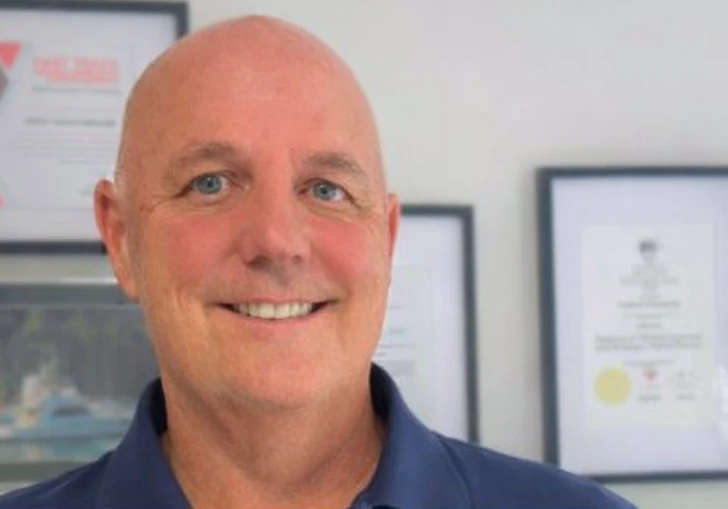
Rob Edmonds
Diploma of Clinical Hypnosis and Strategic Psychotherapy
Certified Neuro-Linguistic Programming Practitioner · ISPA member · ASCH member
Rob was nineteen and could not speak in front of a room. Not nervous, genuinely unable, and it was costing him exams. He tried something he had run out of reasons not to try, and a few sessions sorted it. It worked in a way that annoyed him slightly, because it should not have been that straightforward. That quietly shaped everything after it.
He trained at the Institute of Applied Psychology in Sydney and went on to create Cognitive Pattern Reprogramming, part of the MindShift Method. He creates every session in the library himself, and still sees clients one to one.

Cognitive Pattern Reprogramming is not a treatment for ADHD, and it does not claim to be. It does not diagnose, treat or cure anything. What it helps with is the layer that builds up around an ADHD mind over the years: the task paralysis, the shame loop, the flooding when something lands wrong. Those are learned responses, and learned responses can shift.
You do not need to change anything about your medication to start, and please do not change any prescription because of a web page. The Mindshift Method sits alongside whatever you are already doing, and plenty of people use it while medicated. Any decision about medication belongs to you and your prescriber.
Sitting still is not required, and neither is holding your attention on it. Get comfortable however suits you. If your attention wanders off, the session keeps working. Nobody has to hold focus for this to do its job, which is rather the point on a pathway built for an ADHD mind.
Starting is the target, not getting comfortable with not starting. Task paralysis is not a motivation problem, it is a stress response that fires when you look at the thing. Focus and Execution for the ADHD Mind is designed to help with that response, so the wall in front of the task gets lower rather than you getting better at tolerating it.
This pathway has a session built for rejection sensitivity, Softening the Sting of Rejection. Rejection sensitivity is one of the fastest automatic responses there is, which is why catching it consciously almost never works. The session goes at the response rather than at your reaction to it, so the gap between the thing landing and the spiral starting gets wider.
A formal diagnosis is not needed to use these sessions. Nothing here requires one and nothing here gives you one. If the list on this page reads like your life, the sessions are designed to help with those patterns whatever label is or is not attached to them.
Systems fall apart because keeping them running needs the exact thing that is hard. There is nothing to maintain here. You press play. If you miss a few days you pick it up again, and there is no streak to break and no backlog waiting for you.
Cognitive Pattern Reprogramming draws on Clinical Hypnosis, Strategic Psychotherapy and Neuro-Linguistic Programming throughout each session. Clinical Hypnosis creates a highly focused state of attention, Strategic Psychotherapy identifies and works with unhelpful patterns, and NLP techniques interrupt those patterns and anchor more useful responses. It is delivered as guided audio. You stay aware and in control the whole way through, and it is designed to sit alongside anything else you already use.
These sessions are written for adults. There are separate programs for kids and teens, and a parent should choose those with them rather than handing over this one. If school refusal or anxiety is in the mix, start with your doctor.
The offer
One session free for 7 nights, no credit card. Subscribe and the whole library opens.
Monthly
Works out at $359.40 a year
Annual
The same as $24.92 a month. You keep $60.40.
That is about 82 cents a night, and you can start tonight.