
For practitioners
Support that continues after the session ends
Guided audio your clients can use between appointments. Made to sit alongside your work, not replace it, and made so you can recommend it without being paid a cent for doing so.
How this stays within your rulesOr call or text Rob on 0412 635 550
In short
- What it is. Guided audio sessions built on Cognitive Pattern Reprogramming, created and voiced by Rob Edmonds, who holds a Diploma of Clinical Hypnosis and Strategic Psychotherapy and is the author of two books on the method. Each session draws on Clinical Hypnosis, Strategic Psychotherapy and Neuro-Linguistic Programming.
- What it is for. The patterns that run around a presenting problem: the 3am replay, the clenched jaw, the overthinking loop, the habit that fires before a decision is made.
- What it is not. Not a treatment, not a diagnosis, not crisis care, and not a substitute for you.
- What it costs you. Nothing. Your client gets one session free for seven nights with no card. Nothing is paid to you, in money or in kind, for suggesting it.
- Designed to work alongside medical, dental and psychological care, never instead of it.

An extra service for your clients
Give your clients something to do between appointments
Fifteen to twenty minutes of guided audio at home, built by Rob for the gap between sessions.
Support that continues at home
Your client leaves with a session to play that night. Nothing to write, nothing to book, nothing to remember. They press play.
Homework people actually do
Worksheets rely on a client sitting down to fill them in. Pressing play is the homework most people manage.
Built for repetition
One session, daily, for around 21 days. That is what tends to make a new pattern hold.
Your work stays yours
The sessions work on the patterns underneath the problem. The assessment, the history and the treatment plan stay with you. Rob's own one-to-one clients use it the same way.
Cognitive Pattern Reprogramming is an integrated method drawing on Clinical Hypnosis, Strategic Psychotherapy and Neuro-Linguistic Programming throughout each session. Clinical Hypnosis creates a highly focused state of attention. Within that state, Strategic Psychotherapy identifies and works with the patterns driving the problem, and is designed to help develop more useful ways of thinking, responding and behaving. NLP techniques are used throughout to interrupt unhelpful patterns and anchor more useful responses. It is delivered as guided audio and designed to sit alongside anything else your client already uses.
Your rules, first
How this stays within your rules
The surgeries, clinics and practices we have spoken to have asked the same question: I am not allowed to promote something I get paid for. Agreed. So you are not paid.
The short answer
You are not paid, in money or in kind, for suggesting the MindShift app to a client. Your client gets one session free for seven nights, with no card, and decides for themselves whether to go on. You decide whether it suits them, and you can stop suggesting it at any point with no consequence to you.
That is deliberate. In New South Wales, MindShift Mentors sits under the Code of Conduct for non-registered health practitioners (Public Health Regulation 2022, Schedule 3) and the matching code for health organisations (Schedule 4). Both say a practitioner or organisation must not offer financial inducements or gifts in return for client referrals from other health practitioners, and must not accept them for referring on. If you are registered with a National Board, your own code adds a conflict-of-interest rule on your side: the shared Code of conduct at 8.11 and 8.12, the Psychology Board code at 8.12 and 8.13, Good medical practice at 10.12. A referral fee would breach ours and put you in breach of yours. So there is none.
What we will not do
- Pay you anything for a referral, now or later
- Give you a gift, a discount or a free membership that depends on referrals
- Put your name, your practice or your logo on our marketing without your written consent
- Ask your clients for testimonials, or use one if it turns up
- Contact your clients. They come to us, or they do not
What you can do
- Hand a client the one-page handout and leave it at that
- Listen to the sessions yourself first. Evaluation access is available on request, with no condition attached and nothing withdrawn if no client ever signs up
- Recommend it as one option among others, in your own words, or not at all
- Stop at any time, without telling us
What the client is told
- One session free for seven nights, no credit card
- The membership is $29.95 a month or $299 a year after that, and they can cancel anytime
- It is designed to work alongside their practitioner's care, not instead of it
- It is not a diagnosis, a treatment or a crisis service
What still needs confirming
- This is our working position, written against the codes named above. A written legal opinion on Schedules 3 and 4 is being obtained and this section will be updated to match it
- How evaluation access is granted inside the app is being confirmed. Until then, ask and we will arrange it by hand
Your discipline, your code
What each code says about being paid to recommend a product, and the clause. Where the honest answer is that a code is silent, it says so.
Counsellor or psychotherapist
Not registered under the National Law, so the NSW Code of Conduct for non-registered health practitioners applies to you directly. Its clause on financial exploitation says a practitioner must not accept financial inducements or gifts for referring clients to other practitioners or to suppliers of therapeutic goods. The PACFA Code of Ethics (2017) and the ACA Code of Ethics and Practice (v16) both require conflicts of interest to be avoided or disclosed and clients not to be exploited financially. Neither association code names referral fees; the NSW code does.
Handing a client the free-trial handout: fine. Being paid for it: no, and we do not offer it.
Psychologist
The Psychology Board of Australia Code of conduct, in force from 1 December 2025, treats any financial relationship that could influence or appear to influence your judgement as a conflict of interest to be identified and disclosed (8.12), and requires financial and commercial dealings to be honest and transparent (8.13). Section 133 of the National Law also makes you the advertiser for anything you hand on that carries a testimonial or an outcome claim about a health service, which is why nothing we give you carries either.
Handing a client the handout: fine, and nothing on it is a claim you have to stand behind. Being paid for it: a conflict you would have to disclose, so we do not offer it.
GP or medical practitioner
Good medical practice (Medical Board of Australia, October 2020) at 10.12 says good practice involves not asking for or accepting any inducement, gift or hospitality of more than trivial value from companies that provide services that may affect, or be seen to affect, the way you treat or refer patients, and not allowing a financial interest in a company providing healthcare products to affect how patients are treated. 10.13 requires financial dealings to be honest and transparent.
Handing a patient the handout: fine. Being paid for it: the sentence above, so no.
Dentist
The Dental Board of Australia adopted the shared Code of conduct on 29 June 2022. At 8.11 it says not to offer inducements to colleagues or enter arrangements that could be perceived to provide them, not to let a financial or commercial interest in a company providing healthcare products affect the way patients are treated, and to tell patients where such an interest exists. Teeth grinding and jaw clenching are the sessions most relevant to you, and they are built to sit alongside a splint and your care, never instead of them.
Handing a patient the handout: fine. Being paid for it: no.
Occupational therapist
Registered under the National Law and bound by the shared Code of conduct (29 June 2022): 8.11 on financial and commercial dealings and 8.12 on conflicts of interest, as for dentists above. Section 133 applies to anything you advertise.
Handing a client the handout: fine. Being paid for it: no.
Exercise physiologist
Not registered under the National Law. ESSA's Code of Professional Conduct and Ethical Practice (v5, December 2024) asks members to avoid situations that produce a conflict of interest and to represent products and outcomes truthfully. It does not name referral fees, so on the association code alone the answer is unclear and worth checking with ESSA. In NSW the non-registered practitioner code applies to you as well, and it does name inducements.
Handing a client the handout: fine. Being paid for it: check with ESSA, and in NSW the answer is no.
Naturopath
Not registered under the National Law. The NSW Code of Conduct for non-registered health practitioners applies to you directly, and naturopathy is a prescribed health service under the Health Care Complaints Act. The ATMS Code of Conduct requires any financial conflict of interest, actual or potential, to be declared to the client and resolved in their interest. ANTA and NHAA members should check their own code's wording.
Handing a client the handout: fine. Being paid for it: no.
Chiropractor or osteopath
Registered under the National Law and bound by the shared Code of conduct (29 June 2022): 8.11 and 8.12, as for dentists above. Section 133 applies to anything you advertise.
Handing a client the handout: fine. Being paid for it: no.
Dietitian
Not registered under the National Law. The Dietitians Australia Code of Conduct treats a financial interest that could influence or be perceived to influence professional advice as a conflict, and DA guidance draws a line between recommending a product (no gain) and endorsing one (gain), advising against the latter inside a therapeutic relationship. In NSW the non-registered practitioner code applies to you as well.
Handing a client the handout: fine. Being paid for it: no.
Coach
It depends on what you hold. A coach with no clinical registration who does not provide a health service is outside both the National Law and the NSW code, and can be a partner on the same terms as anyone else, subject to the Australian Consumer Law. A coach who is also a registered psychologist, or who describes their work as therapy or counselling, is a health practitioner for this purpose and the row for that discipline applies.
Partners who are not health practitioners, such as coaches with no clinical registration, content creators and workplace partners, come in through our affiliate route in the app rather than through this page. Ask and we will send the details.
The full research, with each source graded by how it was reached, is in our practitioner compliance notes. Ask Steve for a copy. Nothing on this page is legal advice; it is the position we hold ourselves to.
Being straight about it
Who it suits and who it does not
Your first question is probably what happens if a client gets worse and you suggested this. So here is the scope, plainly.
It tends to suit an adult client who
- Has stress, worry or overthinking that keeps running after the session ends
- Cannot fall asleep or stay asleep, or wakes wired at 3am
- Grinds or clenches, alongside their dentist's care
- Has a habit that fires before they have decided anything: smoking, vaping, drinking, gambling, late-night eating
- Is going through menopause and finds the nights and the fuse are the hardest part
- Has ADHD and wants something for the spiral and the crash, alongside their existing care
- Wants something between appointments that asks nothing but pressing play
It is not for a client who
- Is in acute crisis or actively suicidal
- Is experiencing psychosis
- Needs treatment for PTSD. The Mind and Body Reset pathway is aimed at the sleep and alertness around it, not at the trauma
- Is a child, unless a parent is present and using the children's pathway with them
- Has been asked by their clinician not to use it
- Needs a diagnosis, a medication review or a treatment plan
If a client is in danger, this is not the tool. Call 000 in an emergency. Lifeline is on 13 11 14, free and open all night. For veterans and their families, Open Arms is on 1800 011 046. Nothing in the app is monitored by a person, and nothing in it replaces you.
What is in it
What your clients can try
Twelve pathways, 50+ sessions, every one written by Rob and every adult session voiced by him. Each link below opens one session free for seven nights, no card. Each pathway line says what its sessions are aimed at, not what they achieve.
- Stress, Anxiety and OverthinkingAimed at the racing mind, the 2am replay and the chest that never quite unclenches.Trial session
- Sleep and RecoveryAimed at falling asleep, staying asleep and the tired-but-wired loop.Trial session
- Focus, ADHD and Mental PerformanceFor adults with ADHD. Aimed at the spiral, the self-criticism and the crash after a big day. It does not treat ADHD.Trial session
- Relationships and Emotional BalanceAimed at the inner critic and the pressure that spills over into a relationship.Trial session
- Habits and Lifestyle ChangeAimed at the trigger behind smoking, vaping, drinking, gambling and the late-night fridge.Trial session
- Single Mum’s ResetFor a parent running on empty. Aimed at the guilt loop and the second shift that starts at 8pm.Trial session
- Dream Glow HollowBedtime stories for children aged four to ten, used with a parent present. The only children's pathway.Trial story
- Menopause, Identity and Emotional ResetAimed at the 3am waking, the short fuse and the sense of self that shifts with it.Trial session
- Mind and Body ResetFor people carrying the alertness that never switched off after a hard stretch. Aimed at sleep and settling, not at trauma.Trial session
- Specific ConditionsTeeth grinding and jaw clenching, alongside a dentist's care, plus a set of single-issue sessions.Trial session
- Abundance MindsetAimed at the scarcity loop and the habit of talking yourself out of things before you start.Trial session
- SafeWork MindShift SystemFor workplaces. Aimed at the pressure of the working day and what gets carried home from it.Trial session
One membership opens all twelve. One session free for 7 nights · No credit card · $29.95/month unlocks all 50+ sessions. Cancel anytime.

Ten minutes, before you recommend anything
Hear a session first
The whole Calm Reset session, no sign up. It is the fastest way to judge whether the register and the pace would suit your clients.
Calm Reset 10 min · Rob Edmonds
0:0010:00
Headphones, sitting or lying down. Not while driving.
- Free session
- No sign up
- Recorded by Rob Edmonds
Who made it
One voice, every adult session
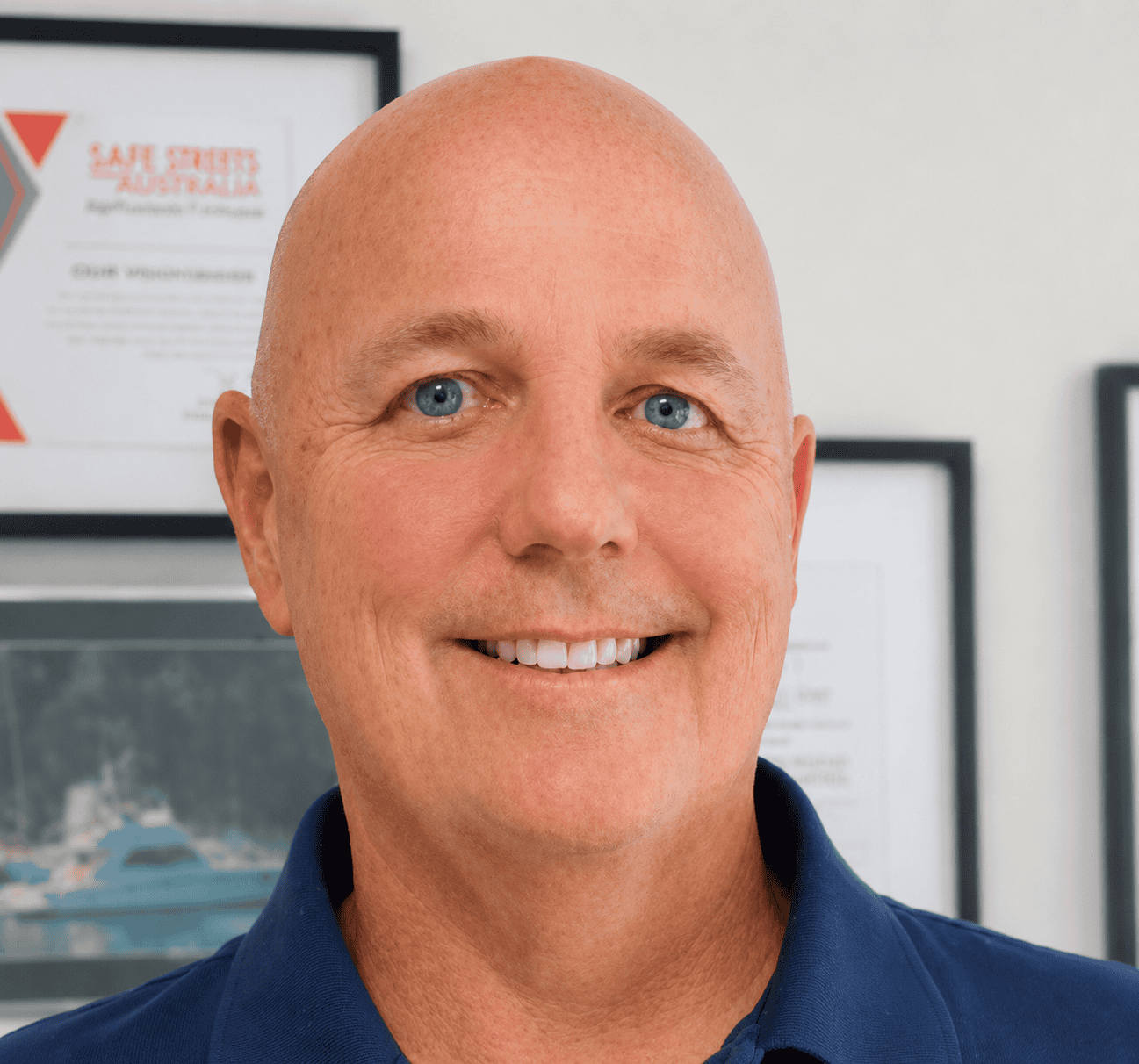
Rob Edmonds
Diploma of Clinical Hypnosis and Strategic Psychotherapy
Neuro-Linguistic Programming Practitioner · Member, International Strategic Psychotherapists Association · Member, Australian Society of Clinical Hypnotherapists
Rob trained at the Institute of Applied Psychology in Sydney and went on to create Cognitive Pattern Reprogramming, part of the MindShift Method. He writes every session in the library himself and voices every adult session. The Dream Glow Hollow stories are narrated for children rather than in his own voice.
Rob is the author of two published books on the method: The Mind Shift Method: Cognitive Pattern Reprogramming (ISBN 978-1-7645646-0-1) and The Mind Shift Method: Founders Built to Lead (ISBN 978-1-7645646-2-5).
Cognitive Pattern Reprogramming is an integrated method drawing on Clinical Hypnosis, Strategic Psychotherapy and Neuro-Linguistic Programming throughout each session. Clinical Hypnosis creates a highly focused state of attention. Within that state, Strategic Psychotherapy identifies and works with the patterns driving the problem, and is designed to help develop more useful ways of thinking, responding and behaving. NLP techniques are used throughout to interrupt unhelpful patterns and anchor more useful responses. People can stay aware and in control while in a focused, trance state, and the listener does throughout.
Rob also sees clients one to one, in person in Forster on the NSW Mid North Coast and by Zoom. That is a separate service from the app, on its own terms, and this page is not about it. His one-to-one sessions are described here, and the team is here.
For your rooms
Material you can print
Three pages, each built so a registered practitioner can hand it on: no testimonials, no outcomes stated as fact, and the crisis line on every one.
-
Client handout
One A4 page for the waiting room or to hand over at the end of a session. Four pathways, one QR code each, and a line for you to write your own name so it never carries ours on your behalf.
-
Practitioner brochure
Two A4 pages: what it is, where it sits in your work, who it suits, and how it stays within your rules.
-
Clinical one-pager
The facts and nothing else: method, scope, evidence stated honestly, data handling, cost, and the compliance position with the clauses cited.
Each opens as a web page. Print it from your browser and it comes out on A4.
Questions practitioners ask
Is it hypnosis?
Yes, hypnosis is part of it. Cognitive Pattern Reprogramming is deliberately delivered within a hypnotic, trance state. Clinical Hypnosis creates a highly focused state of attention, Strategic Psychotherapy works with the patterns driving the problem within that state, and NLP techniques are used throughout to interrupt unhelpful patterns and anchor more useful responses. People can stay aware and in control while in trance, and the sessions are designed to sit alongside anything else a client already uses. Clients should listen sitting or lying down, never while driving.
Is it a treatment?
No, the MindShift app is not a treatment and it does not diagnose anything. It is self-guided audio that works on the patterns around a problem, such as the 3am replay or the clenched jaw, and it is designed to work alongside medical, dental and psychological care rather than in place of it.
Do I get paid for recommending it?
No, nothing is paid to a health practitioner for recommending the MindShift app, in money or in kind. Your client gets one session free for seven nights, with no card, and that is the whole offer.
Why is nothing paid?
Nothing is paid because in New South Wales a health practitioner or health organisation must not offer financial inducements or gifts in return for client referrals from other health practitioners, under Schedules 3 and 4 of the Public Health Regulation 2022, and most registered practitioners are bound by a conflict-of-interest rule on their own side. A referral fee would breach our code and yours, so there is none.
Can I listen to it before I recommend it?
Yes, you can listen before you recommend anything. The Calm Reset session on this page plays in full with no sign up, and evaluation access to the library is available on request, with no condition attached and nothing withdrawn if no client ever signs up. Call or text Rob on 0412 635 550 or email support@mindshiftmentors.com.
What does my client pay?
Your client pays nothing for the trial: one session free for seven nights, no credit card. After that the membership is $29.95 a month or $299 a year, it opens all twelve pathways and 50+ sessions, and they can cancel anytime from their account.
What if my client is in crisis?
A client in crisis should not be given an app. Call 000 in an emergency, and Lifeline is on 13 11 14, free and open all night. Nothing in the MindShift app is monitored by a person, and the sessions are built for the long grind rather than for an emergency.
Can I use it with children?
The adult library is written and voiced for adults. The one children's pathway is Dream Glow Hollow, bedtime stories for children aged four to ten, and it is designed to be used with a parent present. Nothing else in the library is intended for a child.
Does it work alongside medication?
The MindShift app is designed to sit alongside medication and never asks anyone to change it. Any decision about a prescription belongs with the prescriber. If a client is on medication, the sessions are simply audio they listen to while continuing as prescribed.
What data does the app collect?
The MindShift app is run by MindShift Mentors Global Pty Ltd, an Australian company, and personal information is handled under the Privacy Act 1988 and the Australian Privacy Principles. The privacy policy at mindshiftmentors.com sets out what is collected and how it is stored. No client information is ever shared back to a practitioner, and no practitioner is told which of their clients signed up.
Can I stop recommending it?
Yes, you can stop recommending the MindShift app at any time, for any reason, without telling us. Nothing is owed in either direction and evaluation access is not withdrawn if you do.
Is there evidence for it?
No clinical trial of the MindShift app or of Cognitive Pattern Reprogramming has been published, and we do not claim one. The sessions draw on Rob Edmonds' training in Clinical Hypnosis, Strategic Psychotherapy and Neuro-Linguistic Programming, set out in his two published books, and on the general literature on repetition and automatic responses, and the honest description is that they are self-guided support, not an evidence-based treatment. If a client reports a change, that is their experience and not a claim we make.
Talk to Rob about whether it fits your clients
A ten minute conversation, practitioner to practitioner. No pitch, nothing to sign, nothing paid.
Or email support@mindshiftmentors.com · MindShift Mentors Global Pty Ltd, 12A Pioneer Drive, Forster NSW 2428