
Do you wake up with jaw pain or morning headaches? You might be grinding your teeth at night, a habit known as bruxism. It can seem harmless at first, but heavy, long-term grinding can strain the jaw and may contribute to TMJ disorder, with pain, clicking sounds and limited jaw movement.
This guide covers the link between bruxism and TMJ symptoms, the early signs to watch for, what can set teeth grinding off, and what helps, from dental care to Cognitive Pattern Reprogramming, which is designed to help you recognise and interrupt automatic stress patterns alongside your dentist or doctor.
TMJ Disorder Symptoms and the Effects of Chronic Teeth Grinding
Before we get to what helps, here are the signs to watch for. TMJ disorder symptoms often look a lot like the effects of constant teeth grinding. Your temporomandibular joint is the hinge connecting your jaw to your skull. It helps you chew, talk and yawn, and when the joint or the muscles around it are overworked or irritated, things can start to feel off. If you grind your teeth, some of these symptoms may sound familiar.
Jaw Pain or Tenderness
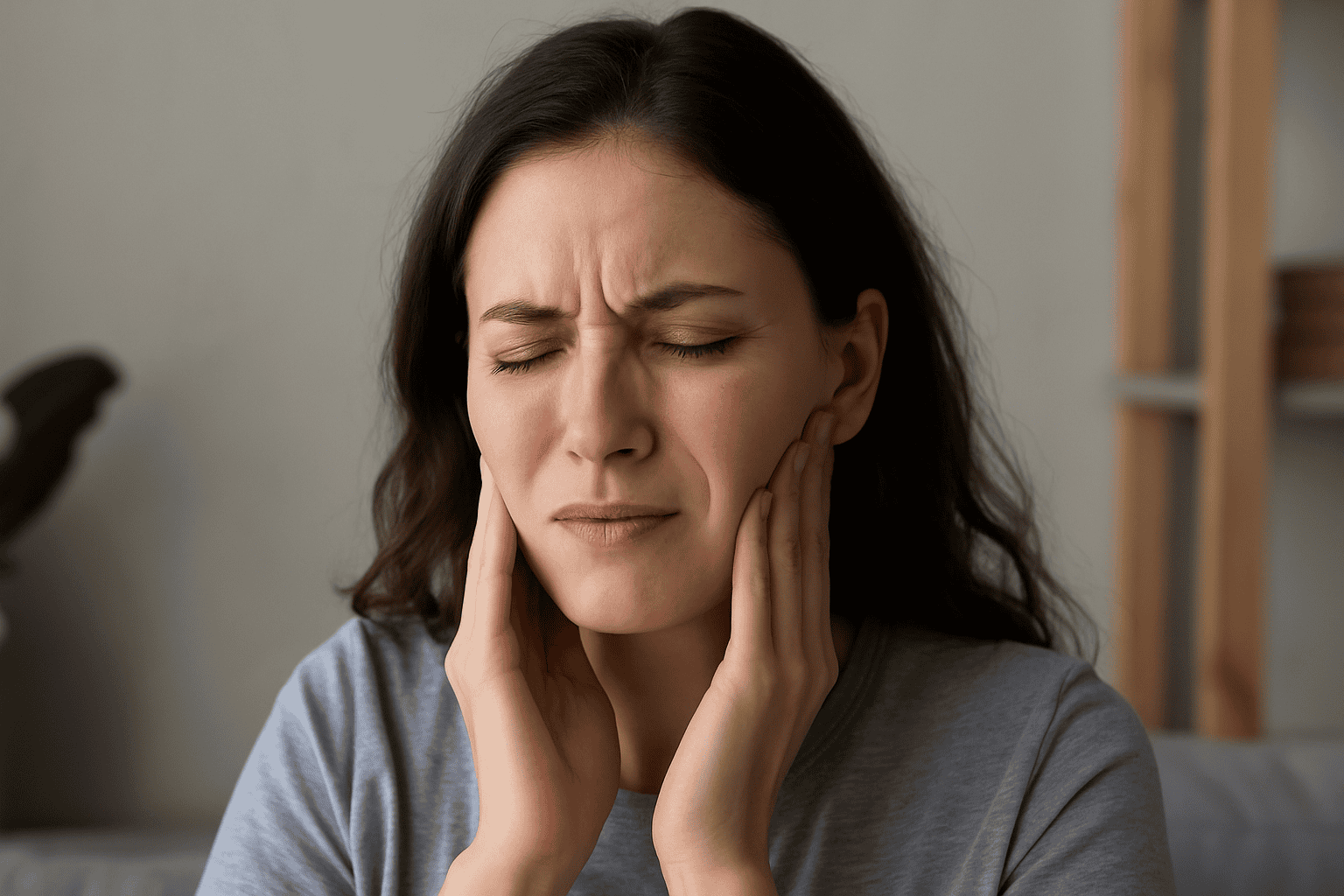
Aching in the jaw is a common sign of TMJ disorders. If you grind your teeth often, you might wake with a sore, tired jaw. The pain can be felt on one or both sides of the face and may be worse when you chew tough foods or yawn widely. Heavy grinding can overwork the jaw muscles, much as overusing any muscle can lead to soreness, and over time that strain may add to inflammation in the joint.
Headaches (Especially in the Morning)
Ever notice a dull headache when you get up? Heavy grinding and TMJ problems are both associated with headaches, often starting at the temples and sides of the head. Grinding at night can tense the jaw and neck muscles, and that tension can radiate upward and feel like a tension headache. Some people find that headaches they had put down to migraine or tension turn out to be linked to clenching, which is worth raising with your dentist or GP.
Ear Pain, Fullness or Ringing
The TMJ sits very close to the ears, so ear-related symptoms are common. TMJ disorders can be associated with earaches, a feeling of fullness or pressure in the ear, or ringing in the ears (tinnitus). Vigorous grinding can also irritate the area around the ear canal and jaw joint. If you have unexplained ear pain or ringing and no sign of an ear infection, it is worth asking a doctor or dentist whether your jaw could be involved.
Clicking, Popping or Grating Sounds
A click or pop in your jaw when you yawn, chew or talk is a common TMJ disorder symptom. These sounds often happen when the joint is not moving smoothly, and heavy grinding may add to that by wearing on the cartilage that cushions the joint or shifting its alignment.
If there is no pain or locking, a clicking jaw might not need treatment. If it comes with discomfort or limited movement, it is worth getting checked.
Difficulty Chewing or Opening Your Mouth
If chewing feels tiring or your jaw feels stiff in the morning, TMJ disorder or bruxism could be involved. Grinding at night puts strain on the jaw muscles and joints, which can make chewing harder, especially with tougher foods. In more serious cases, the jaw can lock or feel stuck, making it hard to open or close your mouth fully.
This can happen when muscle fatigue or joint inflammation limits the jaw’s range of motion. If your jaw loosens up as the day goes on, that can be a sign that night-time clenching is involved, and it is worth mentioning to your dentist.
Facial and Neck Pain
The pain is not always in the jaw itself. TMJ problems can be associated with aching in the cheeks, along the side of the face, and down into the neck and shoulders, because these muscles work together. A tense jaw can go with tense neck muscles. Many people who clench report a sore neck or stiff shoulders, so general facial pain or a crick in your neck in the morning may be connected to a grinding habit.
Tooth Wear and Sensitivity
Worn-down teeth are not a direct TMJ symptom, but they are a common effect of long-term grinding and often show up alongside TMJ problems. Grinding puts heavy pressure on the teeth and can lead to flat or chipped enamel, shortened tooth edges and, over time, loose teeth. This damage can cause tooth sensitivity, especially to cold drinks or sweet food.
Dentists can often spot signs of bruxism from the wear on your teeth, sometimes before you know you grind. As enamel wears down, your bite can shift, which can affect jaw alignment and may make TMJ symptoms worse.

Recognising Early Signs Before TMJ Gets Worse
How do you catch a problem before it becomes daily jaw pain? Several early signs of teeth grinding and TMJ issues are worth keeping an eye (and ear) out for. Noticing them early gives you the chance to make changes and see your dentist before things progress. Here are some red flags:
Morning Jaw Soreness or Stiffness
One of the earliest clues is waking with a tight, sore jaw. It might feel tiring or mildly painful to open your mouth first thing, almost as if your jaw did an overnight workout. This often eases after you have been awake a while, but it is worth noting. Consistent morning jaw soreness can be a sign of clenching or grinding in your sleep.
Frequent Morning Headaches
Occasional headaches have many causes, but frequent dull headaches on waking, especially around the temples or behind the eyes, can be associated with bruxism. They are often tension headaches linked to jaw muscle contraction. A pattern of morning headaches is a good reason to see a dentist or GP.
Your Partner Hears You Grinding
Many people do not know they grind their teeth at night until someone tells them. If a partner, family member or housemate mentions a harsh grinding or squeaking sound, take it seriously. Some people describe it as the sound of walking on gravel. Loud grinding is a sign worth raising with your dentist, even if you feel fine now.
Teeth Are Starting to Wear Down or Chip
Take a look at your teeth in the mirror. Do the biting edges look flatter than they used to? Are there tiny chips or cracks? Enamel wear often starts subtly: the pointed canine teeth may look dulled, or your molars flatter on top. Your dentist may also point out wear facets (flat, shiny spots) at a check-up. Early on this may not cause pain, but it can be a sign that grinding is ongoing.
Increased Tooth Sensitivity
Sensitivity can go hand in hand with enamel wear. Cold drinks, hot tea or even brushing may trigger a zing. Many things cause tooth sensitivity, but a pattern of new or worsening sensitivity, especially alongside other signs here, is worth raising with your dentist, as it can go with enamel wear or tiny cracks.
Occasional Jaw Clicking (Without Pain)
A single click or slight pop when you yawn widely can be an early sign of a TMJ issue. At first it might not hurt. It can indicate that the joint’s disc or alignment is starting to be affected, and it may come and go. Mentioning it to your dentist early is sensible, and they can advise on gentle jaw exercises or ways to reduce strain. If ignored, occasional clicking may progress to more frequent popping and sometimes painful clicking or locking.
Tenderness in the Face or Ears When Pressed
If you gently press a finger just in front of the ear, over the jaw joint, and it feels tender or sore, that can be a sign of joint irritation. Some people also feel mild pain or tiredness in the cheek muscles by the end of the day or after chewing gum. These aches may come and go, but they hint that the jaw muscles are under strain, whether from daytime clenching or night-time grinding.
You Find Yourself Clenching During the Day
Teeth grinding is not only a night-time issue. Many people clench their jaw during the day without noticing, especially when stressed, focused or tense. Whether you are driving, working at your desk or under pressure, you might notice your teeth pressed together and your jaw muscles tight.
Ideally your jaw is relaxed with your teeth slightly apart at rest. Daytime clenching adds to muscle fatigue and may carry over into sleep. Catching the habit early is a useful step.

Common Causes of Teeth Grinding (Bruxism)
Why do people grind their teeth? Bruxism rarely has one single cause. It is linked to a mix of physical, psychological and lifestyle factors. Some of the most commonly reported are:
Stress and Anxiety
Stress is one of the most commonly reported triggers for adult bruxism. When you are anxious or overwhelmed, the body tends to tense up, often in the jaw. Many people clench during the day or grind at night during stressful periods. It can feel as if the jaw is chewing through the worries. Without any way to ease the stress, the pattern may continue, and TMJ symptoms like jaw pain and limited movement can follow.
Personality and Lifestyle Factors
Some research associates certain personality traits, such as being highly driven or easily frustrated, with grinding, though this is far from universal. Habits like chewing gum, biting nails or chewing pens can keep the jaw muscles tense, which may make grinding more likely.
Caffeine, Alcohol and Tobacco
Stimulants can increase muscle activity and interfere with restful sleep. Too much caffeine, especially late in the day, can leave you feeling wired. Alcohol might help you fall asleep faster but can disrupt sleep stages, and it may increase grinding. Nicotine, in cigarettes and vapes, is also associated with bruxism. Cutting back, especially in the evening, may help.
Sleep Disorders (Sleep Apnoea)
Bruxism and sleep apnoea often overlap. People with obstructive sleep apnoea may clench in response to breathing disruptions during sleep, and other sleep problems like nightmares or irregular sleep schedules can also be associated with more grinding. If you snore loudly, feel tired during the day, or have been told you stop breathing at night, a sleep study could be a sensible next step, and your GP or dentist can advise.
Certain Medications and Substances
Some prescription medications are associated with teeth grinding. Antidepressants such as SSRIs (for example fluoxetine or sertraline) are known to cause bruxism in a small number of people, and some recreational stimulants are also linked to intense clenching. If your grinding started after a new medication, talk to your doctor. Do not stop or change a medication on your own.
Malocclusion (Bite Alignment Issues)
If your bite is misaligned because of crooked teeth, missing teeth or dental work, your jaw may shift or grind to find a stable resting point. This can strain the jaw joint. A dentist can spot alignment issues and may recommend orthodontic treatment or adjustments.
Age and Life Stages
Bruxism is common in children, often during teething or growth phases, and usually settles on its own. In adults it is more frequently reported in the 20s to 40s, a time of life stressors like work, relationships and parenting. Some women notice more clenching during hormonal shifts such as menopause, possibly related to sleep disturbance or mood changes.
Other Medical Conditions
Less commonly, some medical conditions are associated with bruxism. Neurological conditions such as Parkinson’s disease may be linked with grinding, either directly or through the medications used. Some research links acid reflux (GERD) with bruxism, though the reason is not settled. A full dental and medical check-up can help rule out other contributors if your case is severe or has not eased.
What Helps, and What Each Option Does
Both teeth grinding and TMJ symptoms are commonly managed, and the most useful plan often combines approaches that look at the grinding itself, the damage or pain, and what may be setting it off. Here is a rundown of the main options, what each one is for and where it stops. Your dentist or doctor can help you decide what suits you.
Dental Care (Mouthguards and Dental Treatment)
A custom night guard is often the first line of protection. Worn during sleep, it cushions your teeth, can reduce strain on the jaw and protects against enamel wear. A guard made by your dentist is fitted to your bite, which is usually more comfortable than a store-bought one. A guard protects your teeth. It does not stop the grinding itself.
Dentists may also recommend fixing bite issues, restoring damaged teeth, or using braces or aligners where misalignment is a factor. If you grind your teeth, a dental check-up is the right first step.
Physical Therapy and Jaw Exercises
Physical therapy for TMJ targets tight jaw muscles and joint function. It commonly includes gentle jaw stretches, side-to-side movements and relaxation techniques for the jaw, neck and shoulders. Massage and heat can ease tension, and cold packs may help with soreness.
Posture can strain the jaw too. A physical therapist can guide you, or you can try at-home habits like resting your tongue gently on the roof of your mouth and gentle nightly jaw stretches. These support the muscles. They do not stop clenching on their own.
Medications and Medical Treatments
There is no one-size-fits-all fix. Short-term muscle relaxants may be prescribed for night-time grinding, and anti-inflammatory medicines may be used for jaw pain. These are decisions for you and your doctor.
In more severe cases, Botox injections into the masseter muscle are sometimes used to reduce clenching force, and trigger point injections or, rarely, TMJ surgery may be considered for structural problems. These are medical decisions to talk through with your doctor or a specialist. They are aimed at easing pain and force so that other measures have room to work.
Stress Management and Behavioural Therapy
Stress is commonly reported as a trigger, so many people look at managing it. Deep breathing, meditation, evening yoga or simply unwinding without screens can help settle the body before bed. For deeper difficulties, cognitive behavioural therapy (CBT) or counselling may help people cope with the anxiety that goes with clenching.
Daytime habits matter as well: biofeedback, reminders like “lips together, teeth apart” and limiting caffeine. These strategies often work best alongside other options.
Cognitive Pattern Reprogramming: A Mind-Body Option
If your teeth grinding seems linked to stress or habitual patterns, Cognitive Pattern Reprogramming may be one option to explore alongside dental care. The Mindshift Method uses Cognitive Pattern Reprogramming, drawing on Clinical Hypnosis, Strategic Psychotherapy and Neuro-Linguistic Programming. Clinical Hypnosis is used to create a highly focused state of attention. Within that state, Strategic Psychotherapy identifies and works with unhelpful patterns and is designed to help develop more useful ways of thinking, responding and behaving. Neuro-Linguistic Programming techniques may be used throughout to interrupt unhelpful patterns and anchor more useful responses.
- Self-guided audio. The sessions are 15 to 20 minute guided audios you listen to in the Mindshift Method app, so there are no consultations or appointments. While listening, you remain aware and in control, able to hear what is being said and respond if you choose.
- Aimed at the stress pattern. It is designed to help you recognise and interrupt automatic stress patterns that may go with clenching. It is not aimed at the jaw joint or the teeth.
- Alongside care. It is non-invasive, and can be used alongside dental care such as a night guard.
- No fixed timeframe. The sessions are designed to be repeated, and people respond differently.
Do not listen while driving or operating machinery. Cognitive Pattern Reprogramming does not diagnose or treat bruxism or TMJ disorder.
One session free for 7 nights. No credit card. $29.95/month unlocks all 50+ sessions. Cancel anytime.
Everyday Habits That May Help
Whether you are working on grinding and TMJ issues now or just want to look after your jaw, some everyday habits may help. They are good for your overall wellbeing too.
Manage Stress Daily
Since stress is one of the commonly reported triggers for grinding, finding ways to unwind is worthwhile. That might mean journaling before bed, a walk after work, meditating in the morning or dancing to your favourite playlist. Choose activities that relax you. Breathing exercises like 4-7-8, or a relaxation app, can help build a habit of calm.
Practise Good Sleep Habits
Grinding often happens during sleep, so sleep quality matters. A consistent bedtime, a relaxing night-time routine and a cool, dark, quiet bedroom all help. Avoid screens right before bed. Some people find sleeping on their back easier on the jaw than on their stomach. If you snore or suspect sleep apnoea, see your doctor.
Watch Your Stimulant Intake
Caffeine, alcohol and nicotine can all be associated with bruxism. Cutting back on coffee and energy drinks in the afternoon, and avoiding alcohol close to bedtime, may help. Chamomile tea in the evening is a calmer swap.
Protect Your Teeth (Mouthguard Use)
A custom night guard is one of the most widely used ways to protect teeth from grinding damage. If your dentist has recommended one, wear it as advised rather than only when your jaw feels sore, and keep up regular dental visits so your dentist can adjust your care as needed.
Avoid Excess Jaw Strain, Day and Night
Everyday habits can add up. Avoid chewing gum, biting on pens or crunching on ice. Take smaller bites and chew evenly on both sides. Through the day, do quick check-ins: are you clenching right now? If so, relax your jaw, wiggle it gently or let it rest naturally. These mini resets may reduce tension in the jaw.
Jaw Exercises and Relaxation Techniques
Gentle jaw stretches and massage may help with flexibility and tightness. Slowly open and close your mouth a few times, shift your jaw side to side, or massage the muscles around your temples and cheeks. A warm compress before bed may help loosen the jaw. If you are unsure which exercises suit you, ask your dentist or a physiotherapist.
Posture Matters
Posture, especially while working or using your phone, can strain the jaw. Sit upright with your monitor at eye level and your shoulders relaxed, and avoid craning your neck forward. Hold your phone at eye level to reduce neck tension.
Take Care of Your Mental Health
Mental health and jaw health are connected. Anxiety and emotional stress can show up physically, including as grinding. Talking to a psychologist or counsellor, joining a support group or building a self-care routine can support your wellbeing. If you are struggling, see your GP.
Frequently Asked Questions about Teeth Grinding (Bruxism) and TMJ Disorder
Can stress really cause teeth grinding?
Stress is one of the most commonly reported triggers for bruxism. When you are anxious or overwhelmed, your jaw muscles may tense up, leading to clenching, especially at night.
How do I know if I grind my teeth at night?
Many people do not realise until they notice jaw pain, morning headaches or worn-down teeth. A dentist can often spot signs of bruxism at a routine check-up.
Is teeth grinding bad for my teeth?
Heavy, long-term grinding can wear down enamel, cause chips or cracks and, in some cases, loosen teeth. It can also strain the jaw and may contribute to TMJ problems over time. That is why seeing a dentist is worthwhile.
What are the symptoms of TMJ disorder?
Symptoms can include jaw pain, clicking or popping sounds, limited jaw movement, and sometimes headaches or earaches. Some people also have jaw locking or discomfort while chewing.
Can children have bruxism too?
Yes. Children can grind their teeth, especially during growth or teething phases, and many grow out of it. If it causes pain or damage, or you are worried, ask your child’s dentist or GP.
Do over-the-counter mouthguards work?
Over-the-counter guards can offer some protection, but a custom-fitted guard from a dentist is usually more comfortable and fits your bite better. Your dentist can advise on which is right for you.
Should I stop wearing my mouthguard?
No. Whether to wear a mouthguard, and for how long, is a decision for you and your dentist. Cognitive Pattern Reprogramming does not replace a mouthguard or any other dental care.
Can TMJ disorder go away on its own?
In mild cases, symptoms may ease with rest, stress management or home care. Ongoing pain or limited movement should be assessed by a dentist or doctor.
What makes TMJ pain worse?
Chewing gum, eating hard foods, poor posture and high stress are commonly reported to aggravate TMJ pain. Noticing and avoiding your triggers can be part of managing symptoms.
What else do people try for bruxism?
People commonly try stress management, jaw exercises, posture changes and relaxation techniques alongside dental care. Some also use Cognitive Pattern Reprogramming, which is designed to help you recognise and interrupt automatic stress patterns. It does not treat bruxism or TMJ disorder. Do not listen while driving or operating machinery.
When should I see a doctor or dentist?
If you have regular jaw pain, clicking or worn teeth, see a dentist or doctor. Getting it checked early gives you more options.
Final Thoughts
Looking after your jaw does not need big changes. A few consistent habits, such as wearing your mouthguard as advised, relaxing your muscles and checking in with your jaw during the day, can add up. Individual experiences vary.
For stress-related jaw tension or clenching, Cognitive Pattern Reprogramming is designed to help you recognise and interrupt automatic stress patterns, and it sits alongside your dentist’s or doctor’s advice. It does not diagnose or treat bruxism or TMJ disorder.
Want to go further? The Mind and Body Reset pathway brings together the guided audio sessions on this, and you can try one session free for 7 nights, no credit card.