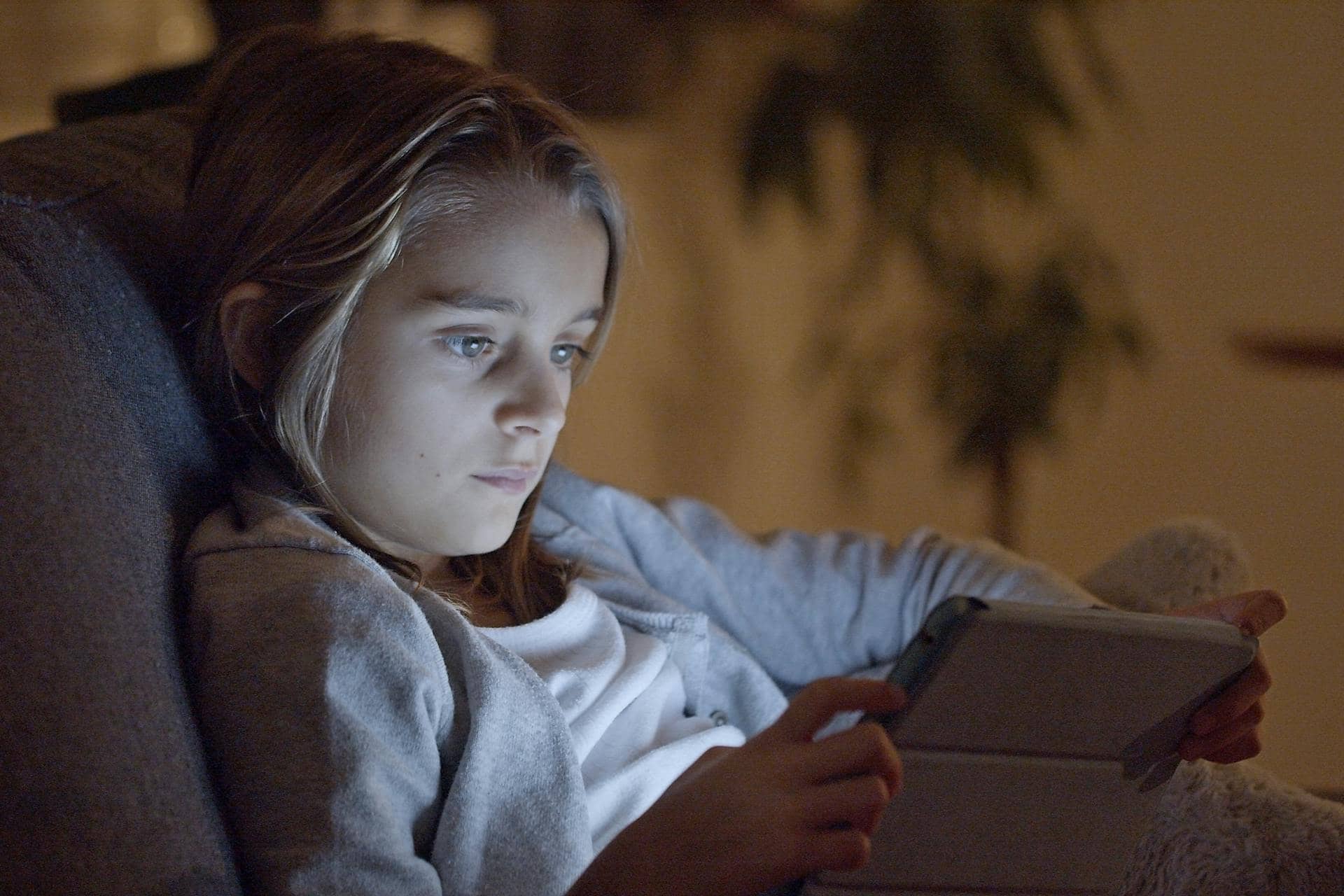

You said five more minutes twenty minutes ago. Now the tablet is going off and your child is on the floor, and the argument is bigger than the thing you took away.
Screens are harder work for an ADHD household than most parenting advice admits. Not because your child is weaker about it, but because a screen is very good at giving an ADHD brain exactly what it finds hardest to get anywhere else. Here is what is actually going on with focus, sleep and the meltdown at the end, six things that help, and where Cognitive Pattern Reprogramming fits if you want something structured to use at home.
On this page
Why Screens Land Differently on an ADHD Brain
Every child likes a screen. The difference for an ADHD brain is in how hard it is to leave one.
- The reward arrives instantly, and it keeps arriving. Tap, something happens. An ADHD brain tends to find it harder to stay with a task that pays off slowly, so a screen is not just more fun than homework, it is a different category of thing.
- Attention is not the problem, steering it is. The same child who cannot stay with ten minutes of reading can stay with a game for two hours. That is not proof they could concentrate if they wanted to. It is the difference between attention that is pulled and attention that has to be pushed.
- The stimulation does not stop when the screen does. After an hour of fast content, many children do not settle the moment the device goes down, which can be why the next request lands badly.
What It Does to Focus
The worry most parents have is whether screens are making the focus worse. Honestly, the evidence is about association more than cause, and a screen is not doing anything to your child that a screen does not do to everyone. What is fair to say is narrower and more useful:
- Slow tasks feel slower afterwards. An hour of fast content can change what ordinary feels like, and a maths worksheet has to compete with that.
- Boredom gets less tolerable. Which matters, because sitting with boredom is how a lot of schoolwork gets done.
- It takes up the time other things needed. Movement, playing with someone, being bored enough to invent something. Those are not filler, and a long screen afternoon quietly replaces all three.
None of that means screens are the reason your child has ADHD. They are not.
Why Bedtime Gets Worse
For many ADHD households, sleep is where screens cause the most trouble, because the ground is often already soft. Children with ADHD often find it harder to get to sleep in the first place.
Two things stack up in the last hour. Light from a screen in the evening can push back the body’s own wind-down signal, so your child is not tired when the clock says they should be. And the content leaves a busy brain busier, so even once the device is away, they are lying there running the game back.
The practical version is not a rule about blue light. It is that the last hour before bed needs to be dull on purpose, and that has to be the routine rather than a nightly negotiation.
Why Turning It Off Causes a Meltdown
This is the part that looks like defiance and is not.
Ending screen time is a transition, and transitions are often one of the harder things for a child with ADHD. It also happens to be a transition away from the most rewarding thing in the day, usually announced with no warning, often when your child is already tired. Any one of those is manageable. All four at once is a meltdown.
Which is worth knowing, because it tells you where to put the effort. A firmer rule does not address any of the four. A warning, a predictable finish time and something specific to move on to address three of them.
Six Things That Actually Help
None of these are dramatic. They are the ones parents come back to.
- Make the finish time predictable, not negotiable. Same point in the day, every day. Most of the fighting is about whether the rule is real, not about the rule.
- Warn before the end, twice. Ten minutes, then two. A timer your child can see does this better than you can, because it is not a person they can argue with.
- Name what happens next. "Screens off" is a loss. "Screens off, then we are walking the dog" is a swap. The second one goes down considerably better.
- Put something physical straight after. The trampoline, the park, the scooter. For a lot of children it helps let off some of the energy the screen built up, and it gives the transition somewhere to go.
- Keep the last hour before bed dull. Not as a punishment, as the routine. Reading, drawing, a bath, quiet audio. It works because it is boring, which is the point.
- Go tech-free together sometimes. Meals, the car, Sunday morning. A rule that applies to you as well stops being a rule about them.
What to skip: taking the device off them mid-game with no warning, and using screen time as the thing that gets removed every time something else goes wrong. Both make the screen more important, not less.
What Is Cognitive Pattern Reprogramming
Cognitive Pattern Reprogramming draws on Clinical Hypnosis, Strategic Psychotherapy and Neuro-Linguistic Programming. Clinical Hypnosis creates a highly focused state in which the therapeutic work takes place. Strategic Psychotherapy is used within that state to identify and work with unhelpful patterns and develop more useful ways of thinking, responding and behaving. NLP techniques are used throughout to interrupt unhelpful patterns and reinforce more useful responses. It is delivered as guided audio and is intended to sit alongside appropriate existing support.
In practice it is a 15 to 20 minute session your child listens to at a quiet point in the day. Nothing is done to them and there is nothing they have to perform. It is aimed at the reaction that tends to fire at the hard moments, which on this subject means the end of screen time and the hour before bed.
The sessions are created by Rob Edmonds, who holds a Diploma of Clinical Hypnosis and Strategic Psychotherapy and is a Neuro-Linguistic Programming Practitioner. You do not need any training. You press play.
It is designed to work alongside whatever your family already has in place, whether that is medication, a psychologist, an occupational therapist or a plan with the school. It does not replace any of them, and it is not an assessment.
This Will Not Suit Every Child
Worth being straight about where this fits.
It tends to suit a child who will settle with headphones on for fifteen minutes, who is old enough to follow a voice, and whose screen battles go the ordinary ADHD way: hard to stop, hard to settle afterwards, hard to get to sleep.
Look elsewhere first if the meltdowns involve your child hurting themselves or someone else, if screen use has taken over school and friendships as well as home, if something has changed suddenly, or if nothing has been assessed yet. Audio is also a poor fit for a child who will not tolerate it. In any of those cases the first call is your GP, paediatrician or psychologist, not a program.
Questions Parents Ask
Does screen time make ADHD worse?
Screen time is not thought to cause ADHD. What it can do is make the day harder to manage: fast, rewarding content is stimulating, and coming off it is usually where the trouble shows up, in focus, mood and getting to sleep. Most of the research here describes an association rather than a cause, so watch your own child rather than assuming.
Why does my child get obsessed with screens?
Screens hand out reward quickly and reliably, which is often what an ADHD brain struggles to get from an ordinary task. That is why a child who cannot sit through ten minutes of homework can stay locked on a game for two hours. It is not laziness and it is not a character flaw.
How does screen time affect sleep?
Two ways. Light from a screen late in the evening can push back the body’s own wind-down signal, and the content itself leaves a busy brain busier. Children with ADHD often find it harder to get to sleep anyway, so both of those land on top of a problem that is already there.
What is a sensible screen time limit?
There is no single number that fits every child, and the official guidance has shifted over the years. Most families do better with a predictable pattern than an exact figure: when screens go on, when they go off, and what happens next. Consistency tends to cause fewer arguments than the total.
Why does turning it off cause a meltdown?
Because it is a transition, which many children with ADHD find hard, landing at the same moment as losing something that felt good. A warning before the end, and something specific to move on to, usually does more than a firmer rule.
Is educational screen time different?
Somewhat. Content that asks your child to think is better than content that just streams at them. But a screen is still a screen when it comes to winding down at night, and it still crowds out movement and play if it takes up the whole afternoon.
Is Cognitive Pattern Reprogramming safe for children?
The sessions are non-invasive, drug-free guided audio designed for children, and there is nothing they have to do except listen. Suitability varies from child to child. If your child has a diagnosed condition, significant symptoms or is already under clinical care, talk to their doctor or clinician first.
Will it replace my child’s ADHD treatment or medication?
No. Cognitive Pattern Reprogramming is designed to sit alongside medical, psychological and educational support, not to stand in for it. Nothing here is a reason to change or stop a prescribed treatment, and that decision belongs with the doctor who wrote it.
What actually happens in a session?
A session is 15 to 20 minutes of guided audio. Your child listens at a quiet point in the day and you press play. There is nothing to book and nothing they have to perform. Access to the full library is $29.95 a month and you can cancel anytime.