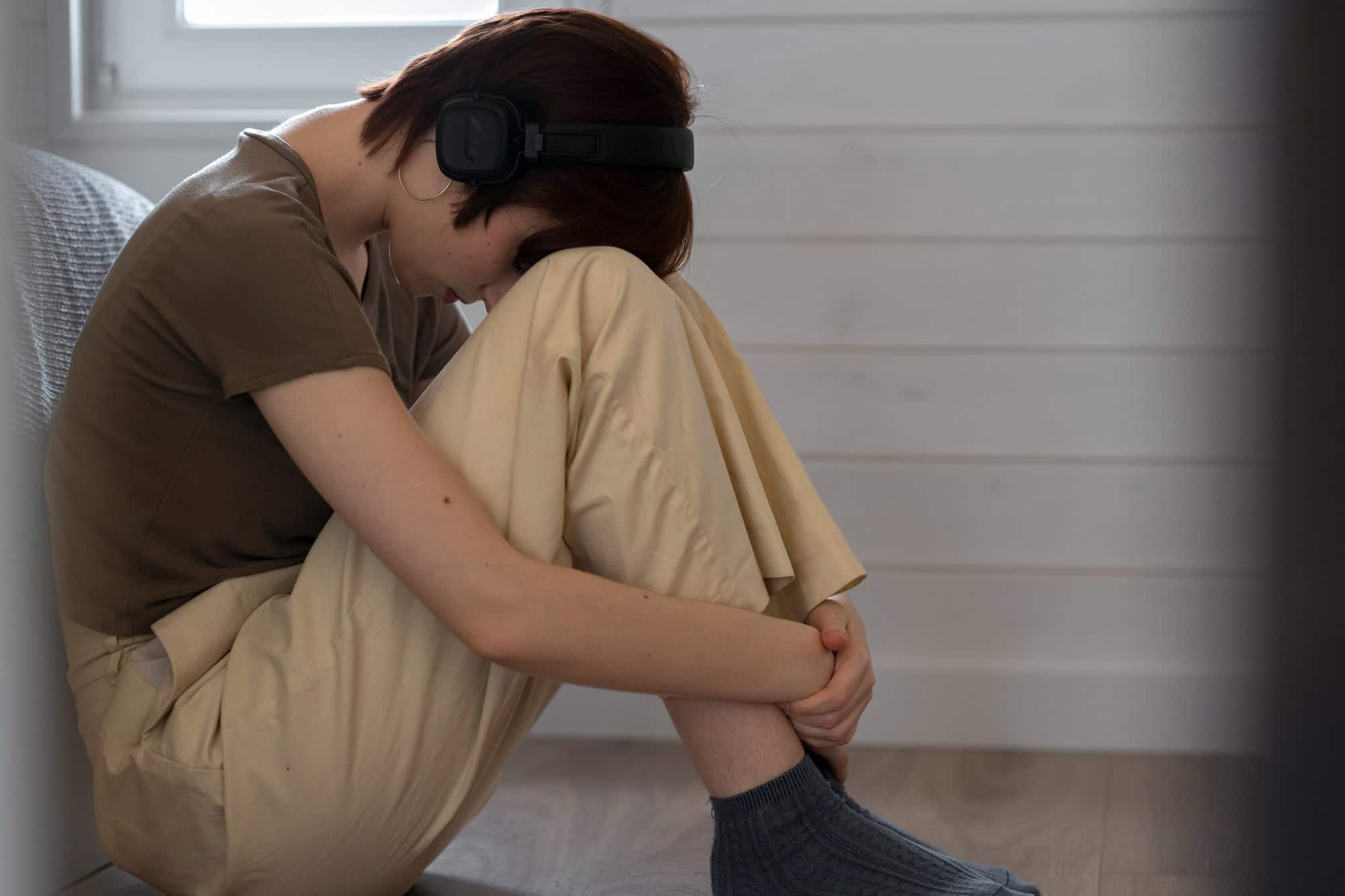

The bell goes at three, and by ten past your child is in pieces. Bag on the floor, shoes still on, crying or shouting or refusing to say a word. And the teacher says they were fine all day.
That gap between school and home is the whole story. Holding it together for six hours costs an ADHD child more than it costs the child sitting next to them, and there is nothing left by the time they reach you. It is not defiance, and it is not a verdict on your parenting.
Here is what is actually going on, the warning signs that come first, five things that help after the bell, and where Cognitive Pattern Reprogramming fits if you want something structured to use at home.
On this page
Tantrum or Meltdown, and Why It Matters
They look alike from the outside and they are not the same thing. The difference changes what you should do about it.
- A tantrum has a goal. Your child wants the biscuit, the screen, the thing you just said no to. It tends to stop once the goal is met or clearly off the table, and they are still watching you while it runs.
- A meltdown has run out of room. There is no ask behind it. The load has gone past what your child can hold, and they are not steering it any more than you are. Consequences do not land, because there is nobody available to receive them.
Teachers and clinicians often call the after-school version restraint collapse. School asks a child to sit still, wait their turn, filter noise and follow instructions for six hours straight, and that costs an ADHD brain real effort. The effort is spent by the time the bell goes. Home is the first place safe enough to stop holding it in.
Which is worth sitting with for a moment. The meltdown happens at home because home is safe. It does not happen at home because you are getting it wrong.
Why It Lands at Home and Not at School
Three things stack up across the school day, and they feed each other.
- Mental fatigue. Focusing, sitting still and resisting distraction all cost your child more than they cost their classmates. By three o’clock that budget is spent, so “put your shoes away” arrives as one demand too many rather than a small one.
- Sensory load. Bells, corridors, chatter, hard light, a scratchy uniform. Your child filtered all of it all day. You never see the filtering, you only see what happens when they stop.
- The release itself. Emotions held down for six hours do not quietly disperse. They come out where it is safe to let them go, which is the car, the driveway or the kitchen.
Handling any of the three as a discipline problem tends to make the afternoon longer.
The Warning Signs Before It Tips
Most after-school meltdowns are less sudden than they feel. There is usually a window of ten or fifteen minutes where the direction can still change, if you know what to watch for.
- Irritability. Snapping at a simple question, arguing over the ordinary routine, picking a fight with a sibling over nothing. The patience goes before the words do.
- Restlessness. Pacing, bouncing, fidgeting, climbing on the furniture. A body that sat still all day wants to move, and it will not wait politely to be asked.
- Going quiet. The one that gets missed. Some children shut down instead of acting out: straight to the bedroom, one-word answers, no interest in talking about the day. That is overload as well, not moodiness.
Any of the three is your cue to take pressure off rather than add to it.
Five Things That Help After the Bell
None of these are complicated. They are the ones parents come back to.
- Say nothing for the first ten minutes. No questions about the day, no reminders, no homework. Let the front door be a soft landing instead of a second set of instructions.
- Food first. Something with protein in it, ready before you leave the house or waiting in the car. Hunger at three o’clock does a fair share of the damage on its own.
- Let the body move. The park on the way home, the trampoline, the dog, a scooter to the corner. Movement spends what sitting still built up, and it goes down better than being told to calm down.
- Push homework later. Twenty or thirty minutes of low-stimulation nothing first: drawing, Lego, lying on the floor. Homework attempted on an empty tank usually costs more than it gains.
- Drop your voice instead of raising it. Short sentences, quiet tone. “You’ve had a big day” lands where “you need to calm down” does not, and you do not have to feel calm to say it.
What to skip: asking them to explain themselves mid-meltdown, stacking on instructions the moment they are through the door, and punishing the collapse itself. None of the three reach a child who has already run out of room.
What Is Cognitive Pattern Reprogramming
Cognitive Pattern Reprogramming is not hypnosis. It uses a structured psychological framework aimed at the automatic response, delivered as guided audio. Your child stays aware and in control the whole way through, and it is designed to sit alongside anything else you already use.
In practice it is a 15 to 20 minute audio session your child listens to at a quiet point in the day. Nothing is done to them and there is nothing they have to perform. It is aimed at the reaction that tends to fire under pressure, which is the part of an after-school crash that a change of routine on its own does not reach.
The sessions are created by Rob Edmonds, who holds diplomas in Clinical Hypnosis and Strategic Psychotherapy, is a Neuro-Linguistic Programming Practitioner, and works directly with clients presenting with ADHD. You do not need any training. You press play.
It is designed to work alongside whatever your family already has in place, whether that is medication, a psychologist, an occupational therapist or a plan with the school. It does not replace any of them, and it is not an assessment.
This Will Not Suit Every Child
Worth being straight about where this fits.
It tends to suit a child who will settle with headphones on for fifteen minutes, who is old enough to follow a voice, and whose afternoons go the ordinary ADHD way: fine at school, in pieces at home, quick to tip over and slow to come back.
Look elsewhere first if the meltdowns involve your child hurting themselves or someone else, if they are happening at school as well as at home, if something has changed suddenly, or if nothing has been assessed yet. Audio is also a poor fit for a child who will not tolerate it, and pushing it does not help. In any of those cases the first call is your GP, paediatrician or psychologist, not a program.
Questions Parents Ask
What is the difference between a tantrum and an ADHD meltdown?
A tantrum has a goal behind it and it usually stops when the goal is met or clearly refused. A meltdown has no ask behind it. The emotional load has gone past what the child can hold, and they are not steering it any more than you are. Consequences do not land on a meltdown, because the part of the brain they are aimed at has already gone offline.
Why does my child hold it together at school and fall apart at home?
Six hours of sitting still, waiting their turn, filtering noise and following instructions takes real effort for a child with ADHD, and that effort runs out. Home is the first place safe enough to stop holding it in. Teachers and clinicians often call this restraint collapse. It tends to be a sign your child trusts you, not a sign you are doing something wrong.
How long does an after-school meltdown usually last?
It varies a lot between children, and from day to day for the same child. Many parents describe something in the range of fifteen minutes to an hour, with a flat, tired stretch afterwards. How long it runs matters less than whether your child comes out of it feeling met rather than in trouble.
What should I avoid while my child is melting down?
Asking them to explain themselves, adding instructions, threatening a consequence, or raising your voice to be heard over theirs. None of it reaches a child who is already past their limit, and all of it tends to make the episode longer. Fewer words, lower volume, and wait.
Can food or sleep make the after-school crash worse?
Both can play a part. A short night or a skipped lunch leaves less in reserve for the hardest hour of the day, and hunger at three o’clock is the easiest of the two to fix. The evidence on sugar specifically is mixed, so it is worth watching your own child rather than assuming. If sleep is a persistent problem, that is one to raise with your GP.
Is Cognitive Pattern Reprogramming safe for children?
The sessions are non-invasive and drug-free, they are written for children, and your child stays aware and in control the whole way through. There is nothing they have to do except listen. If your child has a diagnosed condition or is under the care of a clinician, talk to them before you add anything new.
Will it replace my child’s ADHD treatment or medication?
No. Cognitive Pattern Reprogramming is designed to sit alongside medical, psychological and educational support, not to stand in for it. Nothing here is a reason to change or stop a prescribed treatment, and that decision belongs with the doctor who wrote it.
What actually happens in a session?
A session is 15 to 20 minutes of guided audio. Your child listens at a quiet point in the day and you press play. There is nothing to book, no appointment to keep, and nothing they have to perform. Access to the full library is $29.95 a month and you can cancel anytime.
When should we get professional help?
If the meltdowns are daily, if they involve your child hurting themselves or someone else, if they are happening at school as well as at home, or if family life is being organised around them, that is worth a proper assessment. Start with your GP, who can refer you to a paediatrician or psychologist. Something you use at home works better on top of that than instead of it.