
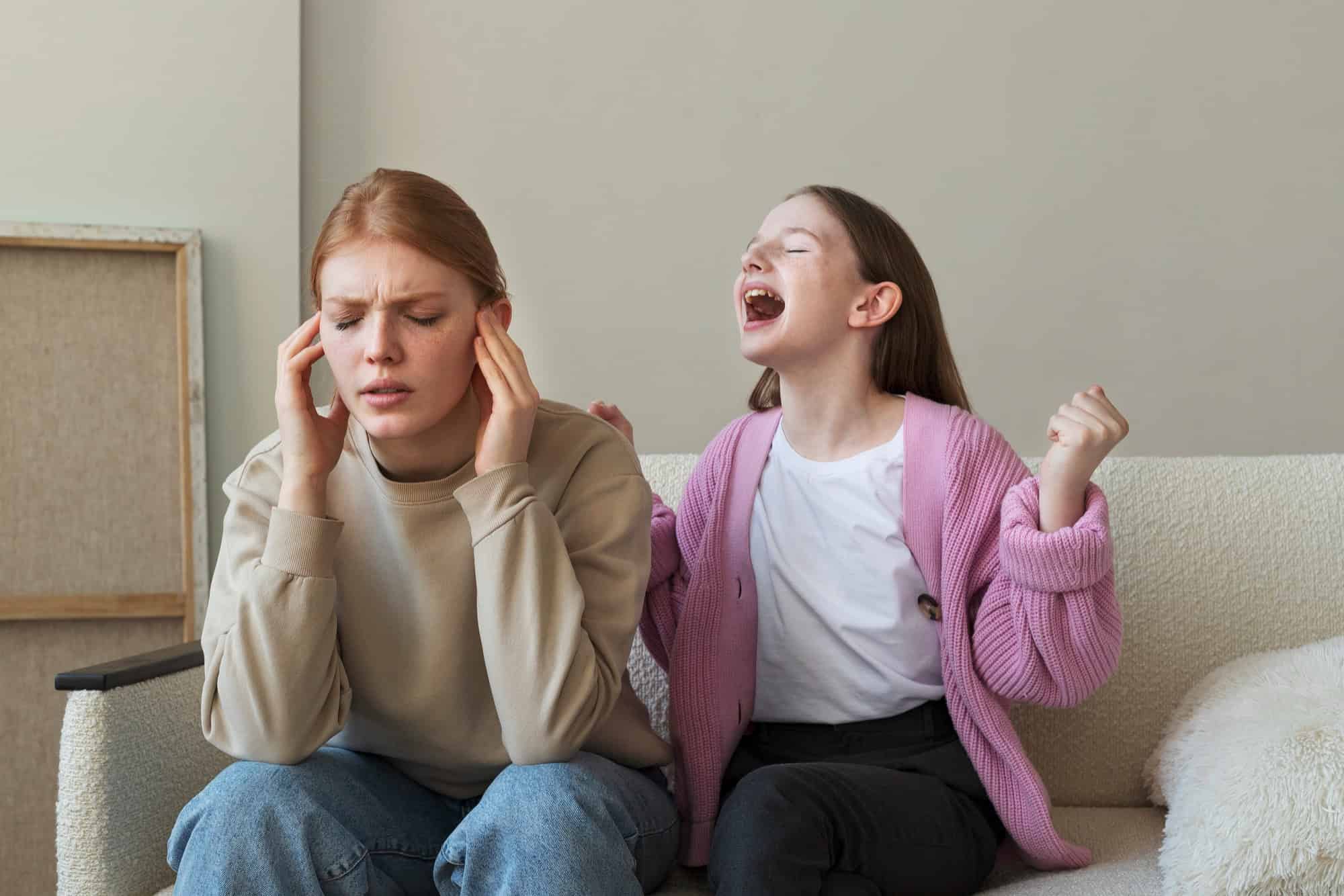
Someone at the next desk is eating an apple. You cannot hear anything else. Not the meeting, not your own thoughts, just the apple, and the anger arriving well before you can talk yourself out of it.
There is a name for that. Misophonia is a strong, involuntary reaction to particular sounds, usually small repetitive ones another person is making. It is not fussiness, you are not choosing it, and the fact that nobody else in the room noticed is the whole problem rather than evidence against you.
It also turns up alongside ADHD in women often enough to be worth knowing about, particularly if you were diagnosed late or never formally at all. Here is what the overlap looks like, what tends to help, and where Cognitive Pattern Reprogramming fits if you want something structured to use at home.
On this page
Why Sounds Land Harder With ADHD
Two things stack, and each one makes the other worse.
- Filtering costs you more. Deciding what to ignore is effortful for an ADHD brain in a way it is not for everyone else. A sound most people never consciously register is one you are actively holding off, all day, and the holding off is what runs you down.
- Getting unstuck from it is the harder half. Shifting attention off something is its own skill, and it is one ADHD tends to make expensive. So the sound does not just get through, it stays, and by the fifth minute of the apple you are not working on anything else.
Nobody has settled why misophonia happens, and the honest state of the science is that it is still being worked out. What is well described is that the reaction is fast and involuntary, which is exactly why reasoning with yourself mid-episode does so little.
It is also not in the DSM-5, so there is no formal diagnosis to be given. That gap is part of why so many women reach forty having concluded they are simply difficult. Clinicians do have screening tools, including the Misophonia Questionnaire and the Amsterdam Misophonia Scale, and an audiologist or psychologist can also rule out hyperacusis and tinnitus, which are different things that get confused with it.
Worth saying plainly, because it is the part women tend to arrive at last: a reaction you did not choose is not a character flaw, and it is not a verdict on how patient you are.
What It Costs at Work and at Home

The cost is rarely the sound itself. It is what you quietly rearrange to avoid it.
At work, an open-plan office is the worst possible room: keyboards, chewing, a colleague on speakerphone. Headphones help and they are also a thing you now have to wear all day, and working late to get the quiet hour costs you the evening. Most people around you have no idea any of this is happening.
At home, it lands on the people you like most, which is the part that hurts. Dinner becomes something to get through. You start eating at a different time, or with the telly on, or in another room, and after a while that has quietly become the shape of the household. Partners and children read it as rejection, because from the outside that is what it looks like.
Then there is the guilt on top, which does more damage than the noise. Being furious about someone breathing is not something most women feel able to say out loud, so it goes unexplained, and unexplained anger gets read as temper. If you have spent years being told you are too sensitive, that lands on ground that was already soft.
What Actually Helps
None of this makes the sounds stop. It is about giving yourself somewhere to stand when they start.
- Cover, do not cancel. Noise-cancelling headphones in silence can make you hunt for the trigger. Something steady underneath, a fan, rain, instrumental music with no words, tends to work better than pure quiet, because it gives your attention somewhere dull to sit.
- Leave before you erupt, not after. Getting up for water at the first flicker is a strategy, not a defeat. The episode is far easier to head off in the first ten seconds than to ride out in the fifth minute.
- Change the input, not the thought. Something cold to hold, a walk to the end of the corridor, a slow breath out that is longer than the breath in. Physical redirection reaches this when arguing with yourself does not.
- Say it once, plainly, to the people who matter. “Chewing sounds set off something I cannot control, it is not about you, and I am dealing with it.” Said once, calmly, in advance, it prevents years of a partner quietly deciding you dislike eating with them.
- Build one reliably quiet hour. Not a quiet life, one hour. A room, a time of day, a commute with the right sound on. Knowing it is coming makes the rest of the day cheaper to get through.
- Get proper help if it is shaping your life. Cognitive Behavioural Therapy and graded sound work are the approaches with the most clinical use behind them, and a psychologist can tell you whether either fits your situation. If your ADHD itself is untreated, that is worth raising with your GP too, because running on empty makes everything here harder.
Reading helps as well, and there is more of it now than there was. Sounds Like Misophonia by Jane Gregory, a clinical psychologist who has it herself, is the most useful single book on it. Delivered from Distraction by Edward Hallowell is the ADHD companion piece.
What Is Cognitive Pattern Reprogramming
Cognitive Pattern Reprogramming is not hypnosis. It uses a structured psychological framework aimed at the automatic response, delivered as guided audio. You stay aware and in control the whole way through, and it is designed to sit alongside anything else you already use.
In practice it is a 15 to 20 minute session you listen to at a quiet point in the day, not while a trigger is going off. The part it is aimed at is the reaction that fires before you get a say in it, which is the half of misophonia that headphones and seating plans do not reach. How much it helps varies, and anyone who tells you otherwise about an audio program is overselling it.
The sessions are created by Rob Edmonds, who holds diplomas in Clinical Hypnosis and Strategic Psychotherapy, is a Neuro-Linguistic Programming Practitioner, and works directly with clients presenting with ADHD. You do not need any training. You press play.
It works alongside whatever you already have in place, whether that is medication, a psychologist, an audiologist or nothing yet. It does not replace any of them, it is not an assessment, and it is not a treatment for misophonia.
This Will Not Suit Everyone
Worth being straight about where this fits.
It tends to suit someone who can sit with headphones on for fifteen minutes at a predictable point in the day, whose sound reactions are the ordinary misophonia shape, and who wants something to use between appointments or while waiting on a referral.
Look elsewhere first if the sounds come with pain in your ears, ringing, or anything that started suddenly, because that is a GP or an audiologist rather than a program. Same if your reaction has ever tipped into harming yourself or someone else, or if you are avoiding enough of your own life that it has stopped being manageable. Audio is also a poor fit if you cannot tolerate a voice in your ears, which for some people with sound sensitivity is simply the case, and pushing it does not help.
Questions Women Ask
Is misophonia more common in women with ADHD?
The research on this is early and the studies are mostly small, so it is not settled. What they point to is that people with ADHD report sound sensitivity more often than people without it, which fits what clinicians hear. Treat it as a pattern worth recognising in yourself rather than a diagnosis you can give yourself from an article.
What are the most common misophonia triggers?
Misophonia triggers are usually small, repetitive sounds made by another person: chewing, sniffing, throat-clearing, breathing, pen-clicking, typing, cutlery on a plate. Many people also react to the sight of the movement that makes the sound, such as a bouncing leg, even with the volume off. The triggers tend to be specific to you rather than loud in any general sense.
Why does a sound that nobody else notices make me so angry?
The anger is not a judgement you are making about the person chewing, and that is the part worth holding onto. It arrives before any thinking has happened, which is why talking yourself out of it in the moment so rarely works. Researchers are still working out the mechanism, and nobody should tell you they have it settled, but the reaction being involuntary is well described.
How can I tell if I have misophonia or just dislike the noise?
Ordinary dislike fades when you look away or think about something else. Misophonia tends to come with a fast physical reaction, anger, panic or disgust, and a strong urge to get away from the sound or stop it. If it is shaping where you sit, who you eat with or which rooms you go into, that is the difference that matters. A psychologist or audiologist can help you sort it from hyperacusis or tinnitus, which are different things.
Is misophonia an official diagnosis?
Misophonia is not listed in the DSM-5, so there is no formal diagnostic code for it, though clinicians are increasingly familiar with it and it is an active research area. Screening tools exist, including the Misophonia Questionnaire and the Amsterdam Misophonia Scale, and a clinician can use those to gauge how much it is affecting you.
Do hormones affect it?
Plenty of women describe sound sensitivity getting worse at particular points in their cycle, and around pregnancy and menopause. The research specifically linking hormones to misophonia is thin, so this is worth tracking in your own experience rather than treating as established. If you notice a pattern, that is useful information for your GP.
Can Cognitive Pattern Reprogramming help with this?
Cognitive Pattern Reprogramming is aimed at the automatic reaction rather than the sound, which is the part of misophonia that arrives before you get a say in it. It is guided audio you listen to at a quiet point in the day, it is designed to sit alongside anything else you already use, and how much it helps varies from one person to the next. It is not a treatment for misophonia and it does not replace seeing a clinician about it.