
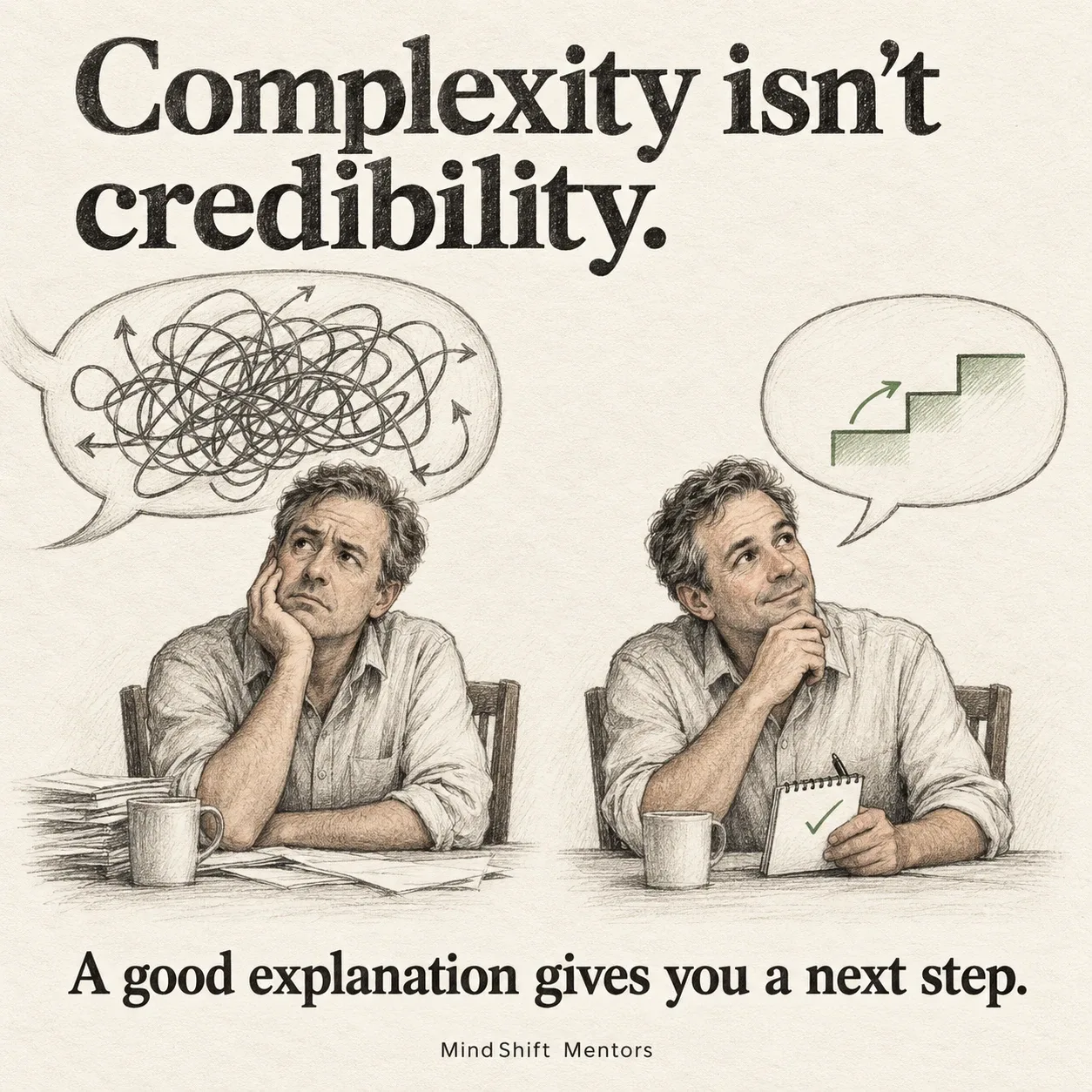
There's a belief that runs quietly through the therapy and wellbeing world: the more sophisticated the language around a problem, the more trustworthy the person explaining it. At MindShift Mentors, our clinical co-founder Rob Edmonds thinks that belief is wrong, and we've built our approach around that view.
Where the belief comes from
It's an understandable one. Clinical language carries weight, and it should. It tells you the person across from you has years of training behind them. Nobody is arguing against training or precision.
The problem is what can get lost behind the signal. A person can finish a session able to describe their diagnosis in exact clinical terms and still have no new way of responding the next time their pattern shows up. They know the label well. They don't necessarily understand themselves any better than before they walked in.
Knowing the name isn't the same as knowing what to do
A label tells you what a pattern is called. It doesn't always tell you what's keeping it going, or what you can do differently at the moment it starts. That second part is where change tends to happen, and it's the part that often gets less airtime.
Many people tell us they've had the experience of leaving an explanation that sounded impressive but didn't shift what they could do next. If that sounds familiar, it isn't a failing on your part. It's a gap in how the explanation was delivered.
What good practice should do
We think good practice should make things clearer, not more confusing. A practitioner should be able to explain what's happening in language the person actually understands.
That doesn't mean lowering the standard of the work. It means remembering what an explanation is for. You shouldn't need to become an amateur therapist to benefit from working with one. What's useful is understanding your own pattern well enough to notice it starting, pause, and respond another way.
How this shapes the MindShift Method
Cognitive Pattern Reprogramming (CPR) is built with this in mind. The MindShift Method doesn't ask you to learn a new vocabulary before you can use it. It looks at what's maintaining a pattern right now and works with that directly, in language you can take with you and use when it matters.
Keeping things plain isn't the easy option. Reducing something real down to what's useful takes more discipline than dressing it up. Results vary from person to person, and CPR is designed to work alongside medical, psychological and other professional care, not in place of it.
Over to you
Have you ever left an explanation that sounded impressive but didn't change what you could do next? We'd like to hear how that felt. You can reach us through the contact page on this site.
If you'd like to see what a plain-language approach feels like in practice, one session free for 7 nights, with no credit card, is a low-pressure way to try it. How it works explains what a session involves.