
Have you been waking up with jaw pain or headaches, wondering what is going on? If you have been searching for a TMJ treatment or a natural bruxism remedy, the jargon does not help. TMJ, TMD, bruxism, the three get thrown around together as though they are the same thing. They are not, and the difference matters, because it changes what actually helps.
What follows is the plain version. What each one is, how to tell which you are dealing with, why stress and unconscious habits are so often sitting underneath both, and what you can do about it at home.
What Is TMJ Disorder (TMD)?
TMJ actually stands for the temporomandibular joint, which is the hinge-like joint that connects your lower jaw to your skull (just in front of each ear). When people say “I have TMJ,” they usually mean TMJ disorder, also called TMD, which refers to problems with that joint or the surrounding muscles. Essentially, TMJ disorder is a condition involving pain, stiffness, or improper function in the jaw joint area. It’s like having a misbehaving door hinge – one that creaks, grinds, or gets stuck when you open and close your mouth.
Common symptoms of TMJ disorder include:
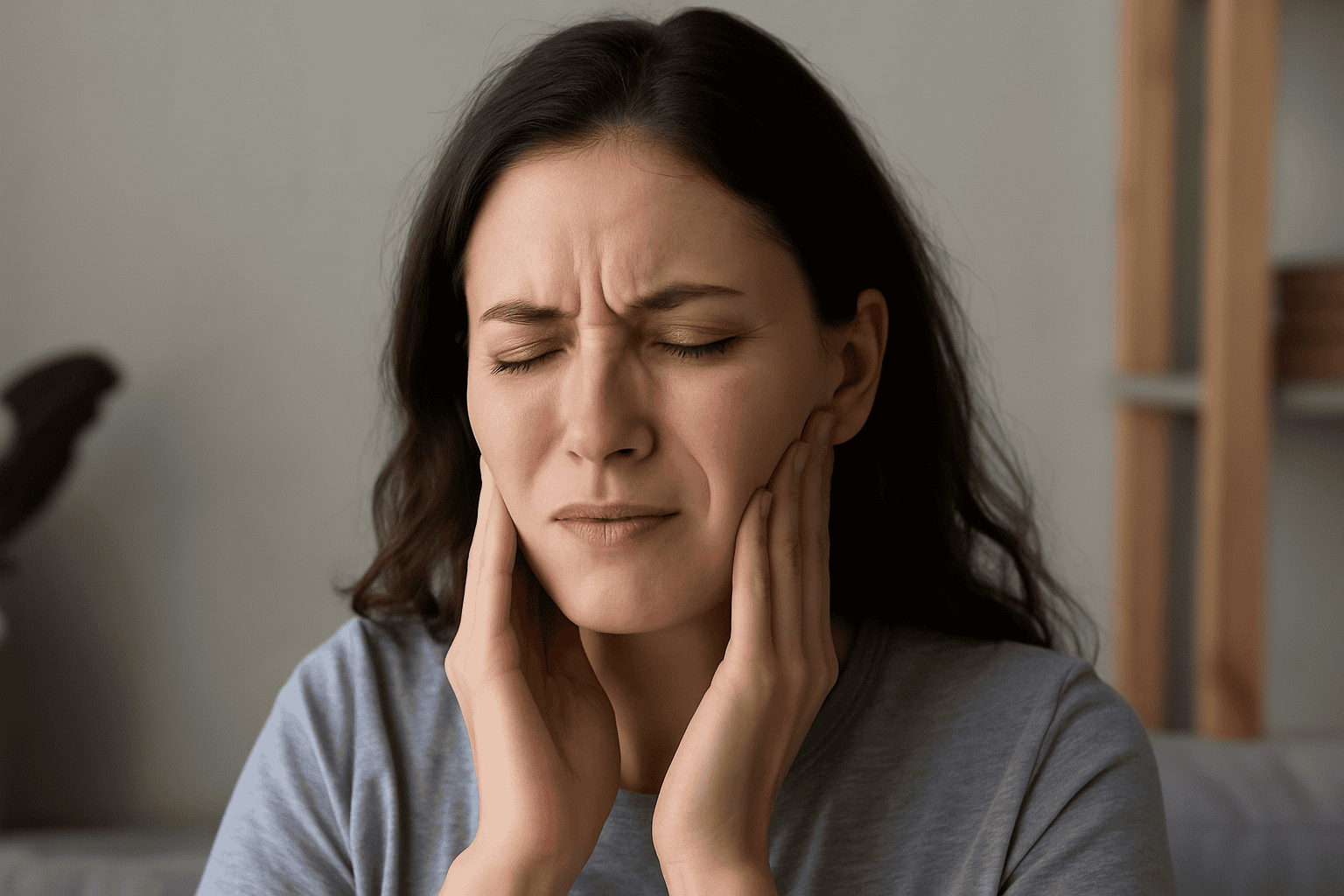
- Jaw Pain or Tenderness – Pain is commonly felt near the jaw joint, close to the ears, and can range from a dull ache to sharp discomfort. This pain may spread to your cheeks, temples, or even down into your neck, making everyday actions like speaking or chewing uncomfortable.
- Clicking, Popping, or Grinding Sounds – You might notice a clicking, popping, or grinding sound when opening your mouth, chewing, or talking. These sounds often result from the jaw joint slipping out of its proper alignment, and while they may not always be painful, they can indicate underlying joint dysfunction.
- Locking or Limited Jaw Movement – The jaw may suddenly feel stuck or have limited movement, making it hard to open or close your mouth fully. This restriction can affect basic tasks like eating, yawning, or even brushing your teeth, and may be accompanied by pain or stiffness.
- Earaches or a Sense of Fullness – Because the jaw joint is located right next to the ear canal, TMJ dysfunction can cause pain in and around the ears. You might also experience a sensation of pressure, fullness, or ringing in the ears, even when there’s no actual ear infection.
- Headaches, Neck, or Shoulder Tension – TMJ issues often trigger tension-type headaches that feel like a tight band across your forehead or at the back of your head. This tension can also extend to your neck and shoulders, causing chronic soreness and stiffness, especially after long periods of jaw clenching or poor posture.
Not everyone with TMJ disorder has the same symptoms, but if a few sound familiar, your jaw joint might be the culprit. It often stems from injury, arthritis, a misaligned bite, or chronic grinding, and stress-related tension is a common factor on top of those. Simply put, TMJ disorder is a mechanical issue with the jaw hinge or surrounding muscles, not just your teeth.
What Is Bruxism (Teeth Grinding)?
Now, onto bruxism – a fancy word for something much more common than you might think. Bruxism is the habitual grinding, clenching, or gnashing of your teeth, usually done without noticing. Some people grind their teeth during the day when they’re stressed or super focused. For many others, it happens during sleep (called sleep bruxism), which means you can be grinding away without even knowing it. In plain terms, bruxism is a behaviour or habit, not a joint disorder. You can think of it as your jaw muscles working overtime when they should be resting.
Common symptoms of bruxism include:
- Teeth Wear or Damage – Flattened, chipped, or worn-down teeth are common indicators of nighttime grinding or clenching. Over time, this pressure can lead to tooth sensitivity, enamel loss, or even visible cracks in the teeth, increasing your risk for dental complications.
- Jaw Soreness or Tightness – You might wake up with a jaw that feels sore, tired, or tense, especially if you grind your teeth at night. This tightness can linger throughout the day, making it uncomfortable to chew, talk, or even rest your jaw naturally.
- Headaches (Especially in the Morning) – Bruxism often triggers morning headaches, typically around the temples or the back of the head. These tension headaches can be mistaken for migraines but are actually caused by jaw muscle strain during sleep.
- Ear Pain or Ringing – Even without an ear infection, you might feel pain in your ears or experience tinnitus (a ringing or buzzing sound). This happens because the stress and inflammation from grinding can affect the nearby ear structures.
- Sleep Disruption – Loud teeth grinding can disturb not only your own sleep but also your partner’s. In more severe cases, you might wake up multiple times during the night or even notice bite marks on the inside of your cheeks or tongue from clenching.
Bruxism often goes unnoticed until symptoms like tooth wear or jaw pain become obvious. It can be caused by bite issues, certain medications, or neurological factors but stress and anxiety are the most commonly reported triggers. Most people grind without knowing they do it, which is part of why it is so hard to stop by deciding to.
TMJ vs. Bruxism: What’s the Difference?
TMJ disorders and bruxism are often linked but are not the same. Bruxism is the habit of grinding or clenching your teeth, usually unconsciously, while TMJ disorder is a condition affecting the jaw joint and surrounding muscles. Bruxism can lead to TMJ problems by overworking the joint, and TMJ issues can trigger more clenching, creating a cycle of pain and tension like slamming a door repeatedly until the hinges break.
To make the comparison clearer, here’s a quick side-by-side overview:
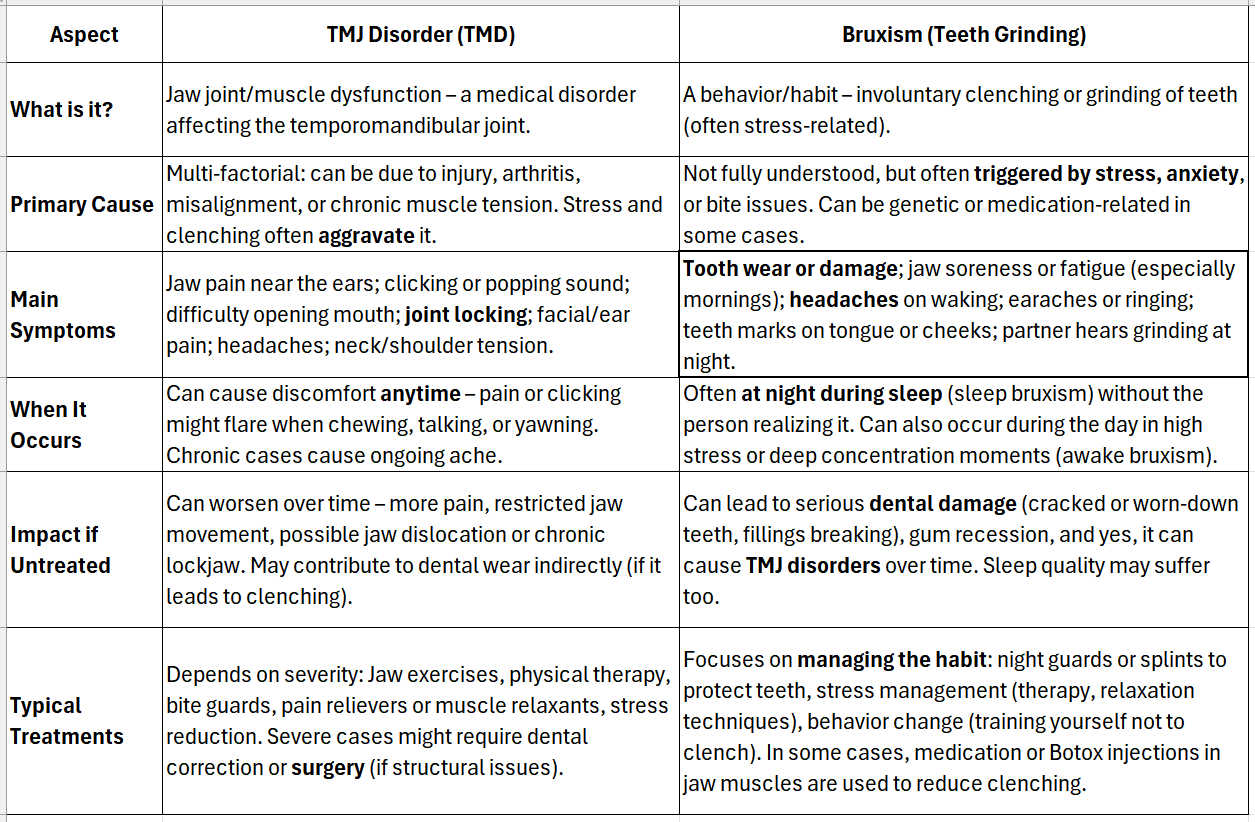
TMJ disorder and bruxism often share symptoms like jaw pain and headaches, making them easy to confuse. The key difference is that bruxism involves the act of clenching or grinding (the force), while TMJ disorder is the resulting joint or muscle pain (the damage).
If you notice joint clicking or locking, TMJ disorder may be the cause. If your pain stems from tired jaw muscles or worn teeth, bruxism could be to blame though many people experience both. Fortunately, they share common triggers and solutions, especially stress, which plays a major role in both conditions.

How Stress Quietly Triggers TMJ Pain and Bruxism at Night
Ever notice how you tense up when you’re stressed or anxious? Shoulders hunch, neck stiffens, maybe your fists clench. One sneaky spot that holds tension – which many of us overlook – is the jaw. Think about it: during a tense moment, you might find your teeth pressed together or your jaw muscles tight without consciously doing it. It’s as if your body is saying, “Hold it together,” and literally holding tension in your jaw. Over time, that habit can become ingrained, contributing to both bruxism and TMJ issues.
How Stress Triggers Jaw Clenching
Stress and jaw pain are intimately linked. When we’re under stress, our nervous system ramps up (the classic “fight or flight” response). Even if you’re not about to literally fight or flee, your body still reacts by tightening muscles – including those in your jaw and face. Chronic stress can lead to chronic clenching.
Stress tends to show up as muscle tension somewhere, and for a lot of people the jaw is where it lands. Grinding and clenching become the outlet. It is not a decision anyone makes, which is exactly why telling yourself to stop rarely works on its own.
Stress-induced clenching strains your jaw muscles and puts heavy pressure on the TMJ joints, often leading to inflammation and pain. Whether you’re tense during the day or grinding at night, the jaw absorbs that stress. It is a loop. Stress causes clenching, clenching causes pain and poor sleep, and poor sleep adds more stress.
“Holding” Emotions in Your Jaw
The jaw doesn’t just chew food; it often chews on our emotions too. Ever caught yourself clamping your jaw shut to “hold in” angry words, or grinding your teeth when you’re frustrated? Without meaning to, we often store unexpressed anger, frustration, or anxiety in our jaw muscles.
Over time, this can become so habitual that your jaw is basically stuck in a semi-flexed state even when you think you’re relaxed. Some therapists even refer to the jaw as a “muscle of emotion.” It’s not woo-woo magic – just simple physiology. Stress triggers muscle contraction, and if you never truly relax, those muscles don’t get the memo to release.
Imagine driving in traffic and clenching your teeth without noticing classic jaw tension from stress. Now apply that to daily stress or anxiety, and your jaw might stay tight all day. For many, clenching becomes so normal they don’t realise it until pain sets in.
Signs Your Jaw is Storing Tension
How do you know if stress is secretly sabotaging your jaw? Here are a few telltale signs of tension in the jaw related to stress or unconscious habits:
- You catch yourself clenching during the day – Whether you’re focused on emails, stuck in traffic, or lifting weights, your upper and lower teeth might be pressed tightly together. Ideally, your jaw should stay relaxed with a small gap between the teeth and lips closed.
- You have a stiff or tired jaw by evening – If your jaw feels sore or fatigued at the end of the day, it’s a sign it’s been overworked. Even without chewing much, tension or unconscious clenching can exhaust the jaw muscles.
- Frequent tension headaches – Headaches that start at the temples or the back of your head can often be traced to jaw and neck tension. Chronic clenching adds stress to nearby muscles, triggering these persistent aches.
- You’ve been told you grind in your sleep, or you wake up sore – If you wake up with jaw discomfort or a dull headache, it’s a strong clue that you’ve been grinding or clenching at night. Sometimes, a sleep partner may even hear it happening.
- Relief feels amazing – If stretching your jaw, using a warm compress, or getting a massage brings noticeable relief, it means your muscles were holding more tension than you realised. That post-relief sensation highlights just how tight things were.
Stress and anxiety often cause you to hold tension in your jaw, which fuels both bruxism and TMJ issues. Many people grind their teeth in their sleep as an unconscious stress response. The good news is that managing stress can help break this cycle and ease the pain.
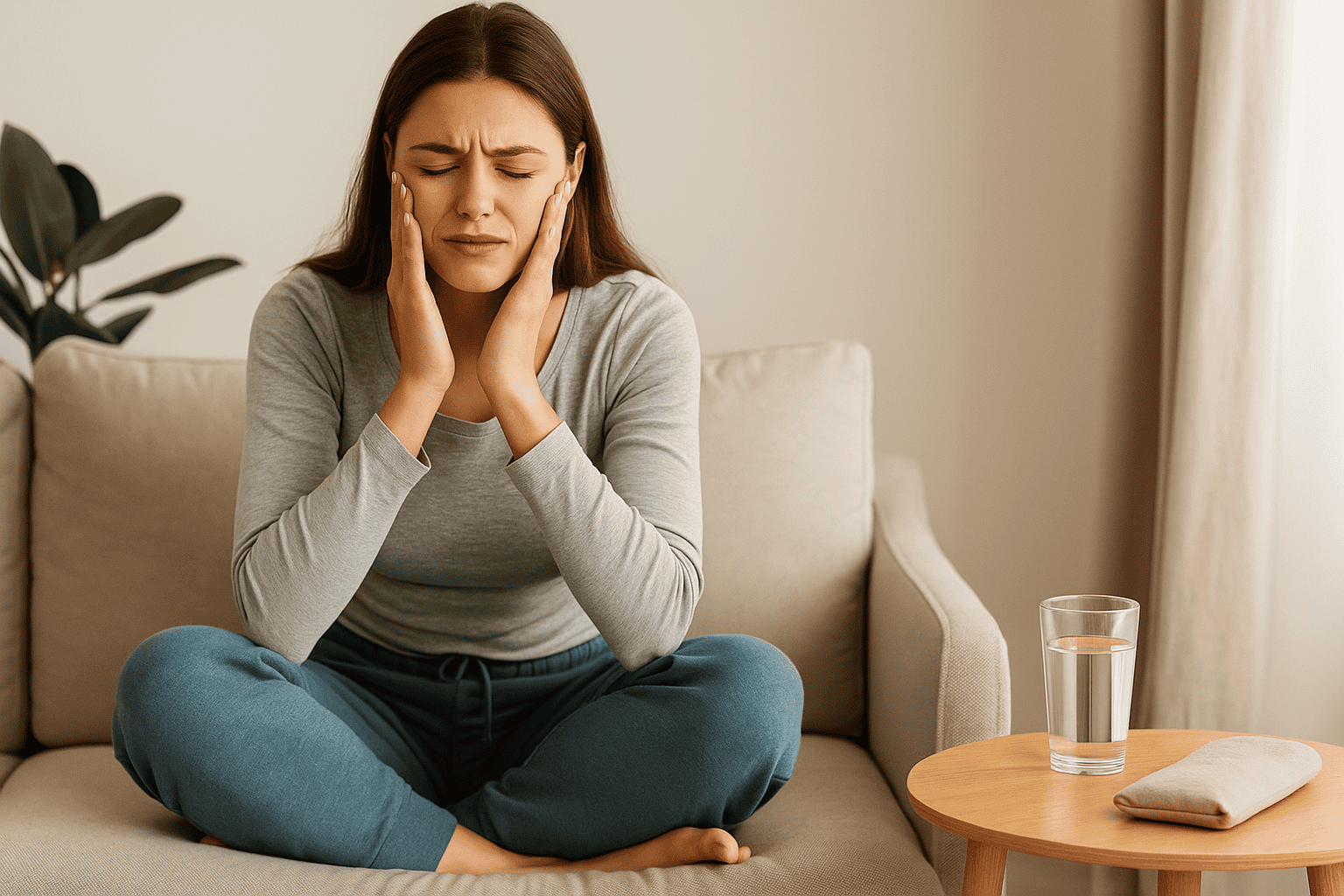
Natural Ways to Relieve TMJ and Bruxism
When you are dealing with jaw pain you want relief, and the first thing most people are offered is a night guard fitted by their dentist. That is worth having. A guard takes the force off your enamel, and enamel does not grow back, so it is doing a real job and doing it well.
What a guard does not do is stop the grinding, and it was never meant to. You can wake with a tense jaw and undamaged teeth. Pain relievers and muscle relaxants sit in the same place: useful for a flare-up, not built for a nightly habit. So the useful question is not which option is better. It is what is setting the grinding off, because that is the part none of them reach.
Let’s explore some natural remedies and lifestyle changes that can help with TMJ and bruxism. These focus on reducing tension and improving function, rather than just masking pain:
Stress Reduction Techniques
Since stress is a major trigger, anything that calms your nervous system will help your jaw. This can include mindfulness meditation, deep breathing exercises, yoga, or progressive muscle relaxation. Even a calming bedtime routine (warm bath, reading, gentle music) can reduce night-time clenching by easing you into sleep. The goal is to dial down the overall stress response so your jaw isn’t on high alert 24/7. (If meditation isn’t your thing, even simple hobbies or activities that relax you – walking in nature, listening to music, gentle stretching – can lower stress levels.)
Jaw Exercises and Massage
There are simple exercises to increase jaw mobility and reduce stiffness. For example, slowly opening and closing your mouth in a controlled way, or moving your lower jaw side-to-side can gently stretch the muscles. Massaging the jaw muscles (the cheek and temple areas) in small circular motions can boost blood flow and relieve tight knots. Some people find relief by applying a warm compress to the side of the face to relax the muscles (especially before bed).
Awareness and Habit Changes
Try to become more aware of your jaw position during the day. A tip dentists often give: keep the tip of your tongue lightly between your teeth when you’re not eating or speaking. This naturally leaves a small gap between your upper and lower teeth, preventing clenching. Also, watch out for daytime triggers – for example, do you clench when focusing or during conflict? If you catch it, consciously drop your jaw, wiggle it a bit, or take a few deep breaths to release the tension. Over time, you can train yourself out of the clenching habit with consistent awareness.
Lifestyle Adjustments
Little things can aggravate jaw issues. If you chew gum often, consider cutting back – constant chewing can fatigue the jaw. Likewise, avoid crunching ice or other very hard foods that strain the joint. Ensure your work setup is ergonomic (poor posture can cause you to jut your jaw forward). And if you suspect sleep issues (like sleep apnoea or heavy snoring), addressing those can sometimes reduce sleep bruxism since your body won’t struggle as much during sleep.
Physical Therapies
If TMJ pain is significant, some people benefit from physical therapy or chiropractic adjustments focused on the jaw and neck. Therapists can do targeted stretches or use techniques like ultrasound therapy to reduce inflammation. Acupuncture is another alternative some find helpful to release tight jaw muscles and improve overall energy flow (and it can be relaxing, which circles back to stress reduction).
Most of what helps with TMJ and bruxism comes back to the same three things: easing the jaw itself, getting it moving better, and turning down whatever has your nervous system on alert. The last one is the hardest to do on purpose, because the clenching is not a choice you are making in the first place.
Where Cognitive Pattern Reprogramming Fits
Cognitive Pattern Reprogramming is not hypnosis. It uses a structured psychological framework aimed at the automatic response, delivered as guided audio. You stay aware and in control the whole way through, and it is designed to sit alongside anything else you already use.
Applied to a jaw, the pattern it works with is the clenching itself. The thing your face does when the day tightens up, before you have had a chance to notice it. You listen privately, lying down, usually at night. The teeth grinding session was written and voiced by Rob Edmonds, who holds diplomas in Clinical Hypnosis and Strategic Psychotherapy.
It is a daily listen rather than a one-off, because repetition over roughly three weeks is what gives a pattern a chance to hold. Results vary, and some people find it does very little for them.
What it does not do
It does not fix a damaged joint, arthritis, a displaced disc, an uneven bite or a cracked tooth. Those are mechanical problems and they need a dentist, a dental specialist or a doctor. It does not replace a night guard either. If you have been fitted with one, keep wearing it.
It works on the tension side rather than the tooth side, so if your grinding turns out to have a cause that is not stress, a medication, an undiagnosed sleep disorder, a bite problem, then it is the wrong tool and a clinician is the one who can tell you that.
Who should look elsewhere first
See your dentist before anything else. They can tell you whether you are grinding, how much wear is already there, and whether a guard is warranted. A GP is the one to see if the pain is constant, if it is breaking up your sleep night after night, or if it is simply wearing you down. If things ever get heavier than that, Lifeline is on 13 11 14 and emergency services on 000.
One session free for 7 nights. No credit card. $29.95/month unlocks all 50+ sessions. Cancel anytime.
TMJ and Bruxism: Common Questions
1. What is bruxism?
Bruxism is basically a fancy word for grinding or clenching your teeth, often without you even realising it (especially in your sleep). Over time, this constant grinding can wear down your tooth enamel, cause jaw pain or soreness, and even lead to headaches from all the tension.
2. What is TMJ?
TMJ stands for the temporomandibular joint – essentially, the hinge that connects your jawbone to your skull (one on each side of your jaw). When someone says they “have TMJ,” they usually mean a TMJ disorder, which is when this jaw joint isn’t working smoothly and causes issues like jaw pain, clicking or popping sounds, earaches, or difficulty chewing.
3. What does bruxism do to your body?
Grinding your teeth can lead to a lot of not-so-fun effects on your body. It can wear down your teeth (damaging the enamel), cause chronic jaw pain or stiffness, and even trigger tension headaches or ear pain from the strain. If bruxism goes unchecked for a long time, it might even contribute to jaw joint problems (TMJ disorders) or other oral health issues.
4. What does TMJ do to your body?
A troublesome TMJ can cause plenty of unpleasant symptoms. It often leads to pain or tenderness in your jaw and can make it hard or painful to chew. You might also experience earaches, frequent headaches, or that annoying clicking/popping – even occasional locking – of your jaw when you open or close your mouth.
5. What causes bruxism?
There’s no single cause for bruxism, but stress and anxiety are the most commonly reported contributors. It can also be linked to habits like clenching your jaw when you’re deep in concentration (which can carry over into sleep), certain medications that affect the nervous system, or lifestyle factors such as too much caffeine, smoking, or alcohol. Even underlying sleep disorders (like sleep apnoea) or other medical conditions can trigger nighttime teeth grinding for some people.
6. How can I stop clenching and grinding my teeth at night?
Breaking the habit of nighttime teeth grinding (and clenching) usually takes a mix of stress relief and practical fixes. For starters, your dentist can fit you with a custom night guard to protect your teeth while you work on the root cause. Managing the stress side matters just as much, so try relaxation techniques and a calming bedtime routine (skip late-night caffeine or screen time), or a recorded Cognitive Pattern Reprogramming session aimed at the tension pattern sitting under the clenching.
7. How can Cognitive Pattern Reprogramming help with bruxism or TMJ?
Cognitive Pattern Reprogramming is the structured process within the Mindshift Method, and it works with the patterns that repeat rather than with the jaw itself. You listen privately to a recorded session written and voiced by Rob Edmonds, built around the tension pattern behind the clenching, and you remain aware and in control throughout. It is designed to sit alongside whatever your dentist or doctor already has in place, rather than to replace it.
8. Can this stop the grinding altogether?
Nobody can tell you that it will, and anyone who does is guessing. Grinding is usually a long-standing habit with no on and off switch, and it has more than one possible cause. What Cognitive Pattern Reprogramming works on is the tension pattern behind it, which is the part that responds to being worked on. Some people find the clenching eases, some find it does not shift much, and stress has a way of coming back around, so most people keep using it rather than finishing with it.
9. Should I see a dentist or doctor first?
Getting checked by a dentist or doctor first is the sensible order. They can confirm whether it is bruxism, a TMJ disorder or both, see how much wear is already there, rule out anything that needs treating on its own, and fit a guard if one is warranted. Once you know what you are dealing with, the stress and habit side is the part you can work on at home.
10. Should I stop wearing my mouthguard?
No, and that is not a call to make from an article. A guard was fitted for a reason, usually to stop your teeth wearing down, and nothing here replaces it. If you want to change how you use it, that is a conversation with the dentist who fitted it.
Where to Start
Jaw pain and morning headaches turn up often enough to start feeling normal, and they are not. Whether it is TMJ disorder, bruxism or both, the thing underneath is usually the same: a jaw that holds on while the rest of you is carrying something.
Start with the dentist, because that settles what you are actually dealing with and protects your teeth while you work on the rest. Then take the tension side seriously, with whichever of the things above you will genuinely keep doing. That is the half most people skip, and it is the half the guard was never going to cover.