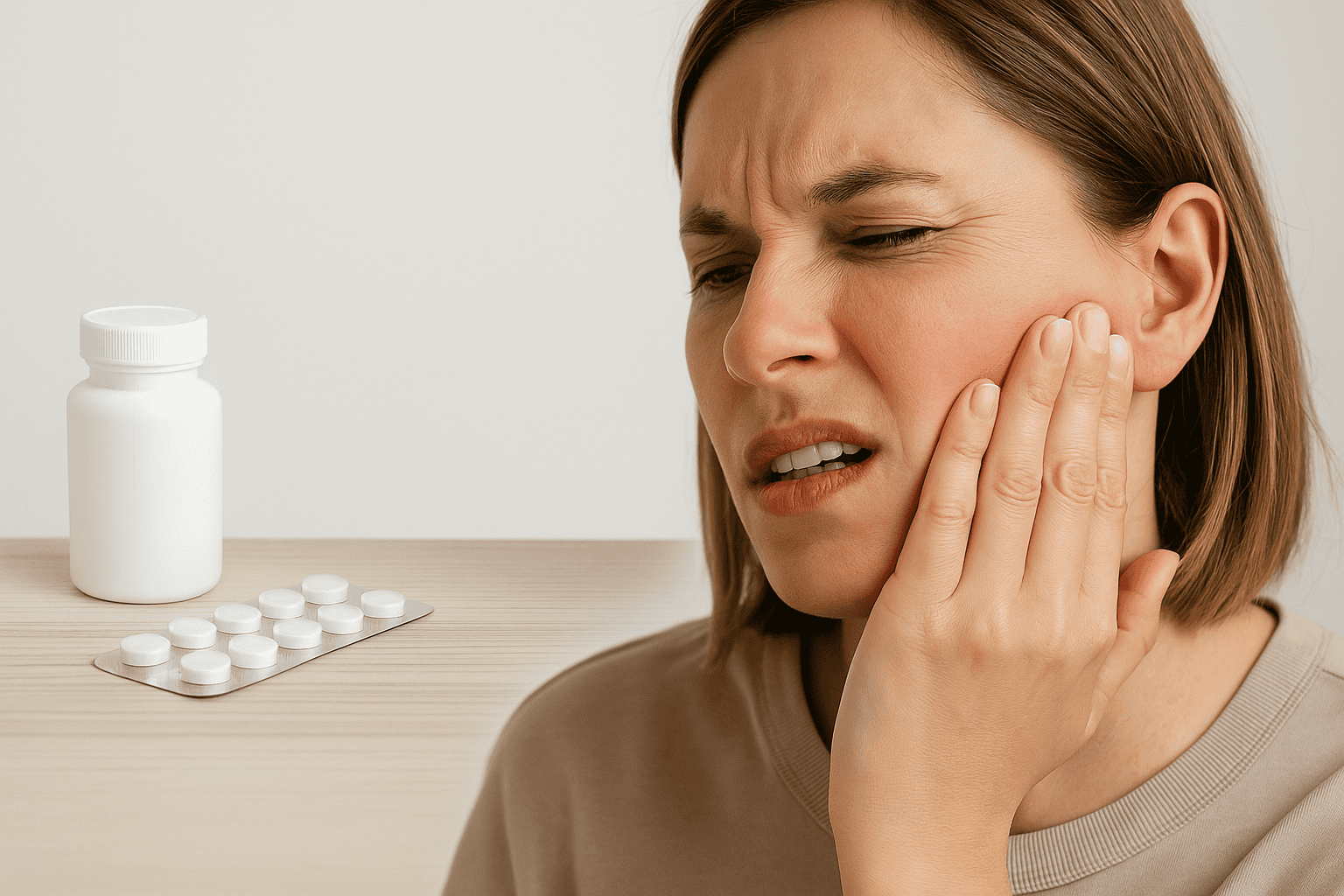

A sore jaw in the morning, headaches first thing, teeth that are starting to look flat. Bruxism is grinding or clenching your teeth, and most people who do it overnight have no idea until something shows up.
This page covers what it is, what sets it off, what it does to your teeth and jaw if it keeps going, and what each of the usual treatments is for. Including ours, and where it stops.
Table of Contents
What Bruxism Is
There are two kinds, and they behave differently.
- Sleep bruxism happens overnight. It is involuntary and you are not there to stop it, which is why willpower has nothing to work with.
- Awake bruxism is usually clenching rather than grinding, and tends to turn up during concentration or tension. People often catch themselves doing it at a desk.
Occasional grinding is not a problem. Doing it most nights for months is, and it is worth having a dentist look at your teeth either way.
What Causes It
Rarely one thing. The factors most often associated with it:
- Stress. The one people report most. Clenching is a way a body carries pressure, and it does not ask permission. You can feel fine on the surface and still be doing it at 2am.
- Sleep apnoea and broken sleep. There is a well described link between grinding and obstructive sleep apnoea. If you snore heavily or wake gasping, tell your GP.
- The bite and the jaw. A misaligned bite can play a part. That is a dentist question.
- Medication. Some medicines, including certain antidepressants, list bruxism as a side effect. Do not stop anything on your own. Ask whoever prescribed it.
- What you put in. Heavy caffeine, alcohol and smoking are all associated with more night-time muscle activity.
- Neurological conditions. A few involve involuntary muscle movement that can include the jaw. Uncommon, and a medical question rather than a dental one.
What Grinding Does Over Time
Grinding is repetitive loading, and it adds up.
Teeth. Worn enamel, which makes teeth sensitive to hot and cold. Chips and cracks. Receding gums. Heavy long-running grinding sometimes means crowns or other restorative work.
The jaw joint. Persistent clenching loads the temporomandibular joint, which can lead to pain, stiffness, clicking, and a jaw that will not open as far as it used to. Headaches, earache and neck pain often travel with it.
Sleep. Grinding breaks up sleep, so people wake unrested and tired through the day, which makes everything else harder to handle. That is the loop worth interrupting.
What Helps, and What Each Thing Does
A mouthguard or bite splint
A custom splint from your dentist takes the damage instead of your teeth. It does not stop the grinding, and it is not designed to. It is protection, and worth having.
Medication
A short course of muscle relaxant or anti-inflammatory, prescribed by your doctor, can get you through a flare-up. They have side effects and they are not a plan for something happening most nights.
Sorting the sleep out
If apnoea is part of the picture, treating it is the thing that matters most and a guard is beside the point. Worth raising with a GP before anything else.
Everyday stress management
Breathing work, a proper wind-down, caffeine earlier, less alcohol. Slow, unglamorous, free.
Cognitive Pattern Reprogramming
Daily guided audio aimed at the stress response rather than the jaw. Next section.
Where Cognitive Pattern Reprogramming Fits
Cognitive Pattern Reprogramming is not hypnosis. It uses a structured psychological framework aimed at the automatic response, delivered as guided audio. You stay aware and in control the whole way through, and it is designed to sit alongside anything else you already use, including your splint and your dentist.
For grinding, the thing it works on is the stress response the clenching is attached to, which is the one part of this a guard cannot reach. It is drug-free, there is nothing to swallow, and you do it at home with headphones for 15 to 20 minutes a day. Some people find their jaw is easier in the mornings. Some do not. Results vary, and we would rather say so.
It does not fix a bite problem, a worn tooth, a damaged joint or sleep apnoea. Those stay dental and medical jobs, and it is not a reason to stop wearing a guard your dentist fitted.
This Will Not Suit Everyone
It tends to suit people who:
- clench or grind in response to stress and recognise that in themselves
- have had the dental side looked at and want to work on the trigger too
- are willing to listen daily for a stretch rather than hunting for a one-off fix
Look elsewhere first if:
- you snore heavily or wake gasping. Sleep apnoea needs assessing properly.
- your jaw locks, catches painfully, or will not open fully. A dentist, now.
- the grinding started with a new medication or a change in your health.
- you have visible tooth damage that has not been looked at.
When to See a Dentist or Doctor
Book an appointment if any of this sounds like you:
- jaw pain that has been there more than a couple of weeks
- a jaw that locks, catches, or will not open fully
- teeth that are visibly worn, chipped or cracked
- headaches most mornings
- heavy snoring, or waking gasping or choking
Nothing on this page replaces medical, dental or psychological care. The audio programs are designed to work alongside it. If you are already seeing someone about your jaw or your sleep, keep seeing them.
FAQs About Bruxism
What is bruxism?
Bruxism is grinding or clenching the teeth. Sleep bruxism happens overnight and is involuntary, so most people do not know they do it. Awake bruxism is the daytime version, usually clenching rather than grinding, and often during concentration or tension. Both can wear teeth and load the jaw joint.
How do I know if I grind my teeth?
The usual signs are a sore or tired jaw on waking, headaches first thing, teeth that feel sensitive or look flattened, and broken sleep. Often a dentist notices the wear before you do, or a partner hears it. A dentist can confirm it from the wear pattern and your bite.
What causes teeth grinding?
There is rarely one cause. Stress is the most commonly reported trigger. Sleep apnoea, a misaligned bite, some medications, alcohol, heavy caffeine and smoking are all associated with it, and a few neurological conditions involve involuntary jaw movement. A GP or dentist can work out which apply to you.
What damage can grinding do?
Long-running grinding can wear enamel, make teeth sensitive, and chip or crack them, which sometimes means crowns or other restorative work. It also loads the jaw joint, which can lead to pain, clicking and restricted opening. Getting it looked at early is easier than dealing with the damage later.
Will a mouthguard fix it?
A mouthguard protects the teeth from the damage grinding does. It does not stop the grinding itself, which is a different job. That is why dentists usually suggest working on the trigger as well, and it is reasonable to do both.
What is Cognitive Pattern Reprogramming?
Cognitive Pattern Reprogramming is guided audio built on a structured psychological framework. It works on the automatic stress response that clenching is often attached to, rather than on the jaw. You stay aware and in control throughout. It is not hypnosis, and it is designed to sit alongside dental and medical care rather than replace it.
How long before I notice anything?
That varies and nobody can give you an honest number. Some people say their jaw feels looser in the mornings fairly early on, others take longer, and some find it does not help them much. The programs are built around listening daily, because repetition is what settles a pattern.
Is it safe?
The audio programs are non-invasive and drug-free, and you stay aware and in control throughout. We are not in a position to clear anyone medically. If you are pregnant, breastfeeding, or managing any health condition, check with your doctor first. Do not listen while driving or operating machinery.
Grinding is usually more than a jaw problem, which is why protecting the teeth and leaving it there tends to leave people cycling through fixes. Get the teeth and the sleep checked, protect them if your dentist says so, and work on the trigger underneath at the same time.